
Reduced Resolution Advanced with deTec4 and DCM4
Press brake applications require safeguarding solutions that can keep pace with constantly changing process conditions. Material is continuously moved into and out of the hazard zone, often interrupting the protective field of a safety light curtain as part of normal operation.
Conventional safety light curtains are designed for fixed resolution and static evaluation logic. Because of this, they frequently interpret these interruptions as unsafe conditions, leading to unnecessary machine stops and reduced productivity.
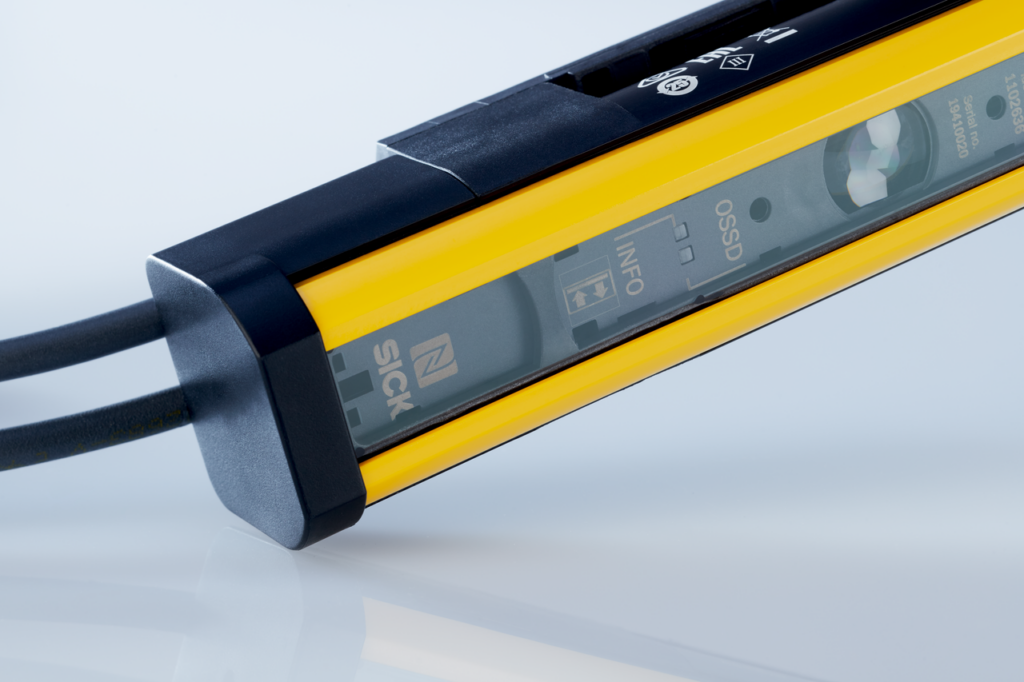
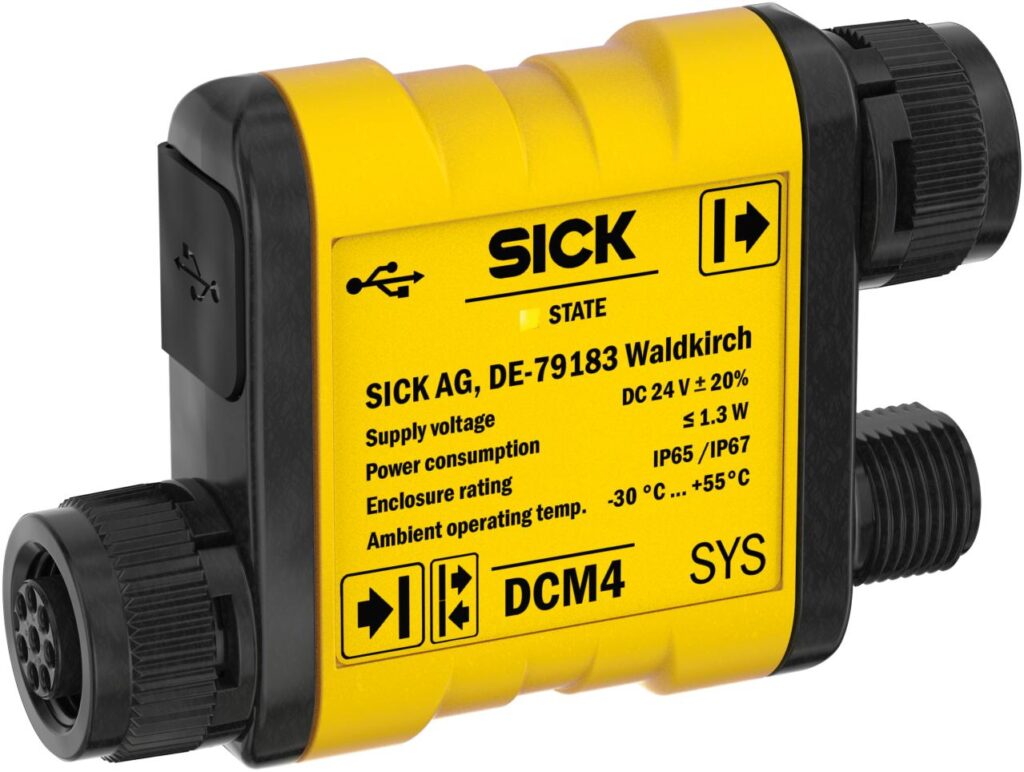
SICK addresses this challenge through the combination of the deTec4 safety light curtain and the DCM4 extension module. This combination enables advanced, application-specific safety functions, including Reduced Resolution Advanced (RRA). It allows for controlled material flow with an active protective field.
Intelligent Extension with DCM4
The DCM4 extension module adds a layer of intelligent safety functionality to the deTec4 platform, supporting reliable hazardous area and access protection without requiring additional external muting sensors. By integrating functions such as blanking, Reduced Resolution Advanced, object pattern recognition, and a smart restart interlock, the system can interpret complex interactions within the protective field directly.
This integrated approach allows material to pass through the safeguarding zone under controlled conditions, increasing system availability and reducing downtime. At the same time, the system maintains consistent and reliable detection of fingers and hands, ensuring that safety performance is not compromised as flexibility increases.
Reduced Resolution Advanced as Floating Blanking
Reduced Resolution Advanced can be understood as an advanced form of floating blanking with partial object monitoring. Rather than simply ignoring a fixed area of the protective field, the function dynamically evaluates interruptions and allows defined objects to pass while maintaining supervision of the remaining field.
The system achieves this by allowing a configurable number of beams within the light curtain to be ignored. The size of the tolerated object is defined relative to the light curtain resolution and can be configured up to n−1 beams, providing significant flexibility in adapting detection sensitivity to the application.
Unlike conventional blanking approaches, RRA maintains active monitoring of the non-blanked portion of the field. This ensures that even when certain beams are intentionally ignored, the system continues to detect unauthorized intrusions outside the permitted conditions.
Area-Based Configuration and Detection Control
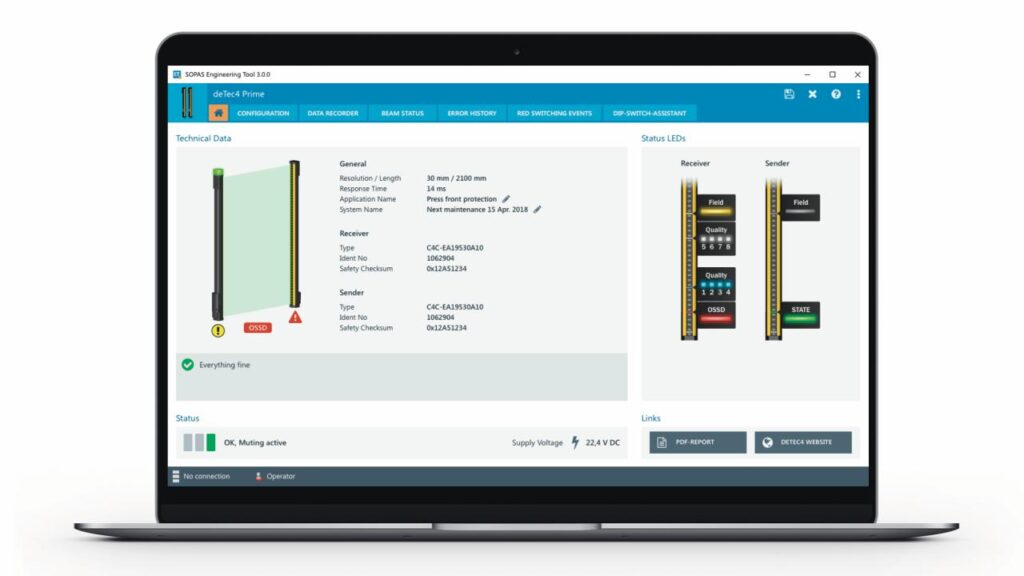
A key advantage of Reduced Resolution Advanced within the deTec4 and DCM4 architecture is its ability to be precisely tailored to the application. Up to four independent areas within the protective field can be configured, each with its own reduced resolution parameters.
Within each defined area, both the size of the ignored object and the permissible area dimensions can be individually set. In addition, the maximum number of allowed ignored objects can be configured separately for each area. This allows the safeguarding system to reflect the actual interaction zones of the press brake, such as regions where material is expected to pass through more frequently or where smaller objects may be present.
This granular configuration capability enables a highly targeted safety solution. For example, larger tolerances can be defined in areas where sheet metal is introduced, while stricter detection criteria can be maintained in zones with higher operator proximity.
Functional Behavior in Press Brake Operations
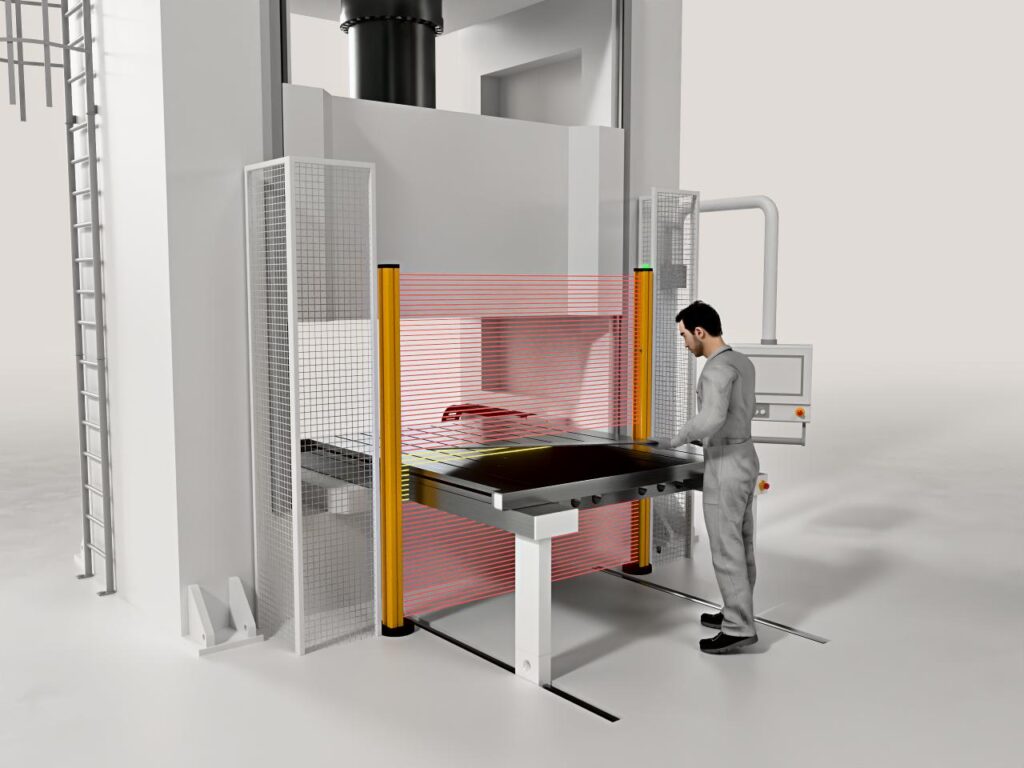
In practice, Reduced Resolution Advanced allows the deTec4 system to evaluate how objects move through the protective field rather than simply reacting to their presence. Sheet metal can enter, leave, and re-enter the field without triggering repeated stop conditions, provided the behavior aligns with the configured parameters.
At the same time, the system continues to interpret deviations from expected patterns as potential hazards. If an intrusion occurs that does not match the defined criteria, such as an object exceeding the permitted size or appearing in an unconfigured area, the system immediately initiates a safe stop.
This context-aware evaluation allows press brake operations to proceed without unnecessary interruptions while preserving the integrity of the protective function.
Interaction with Additional Detection Functions
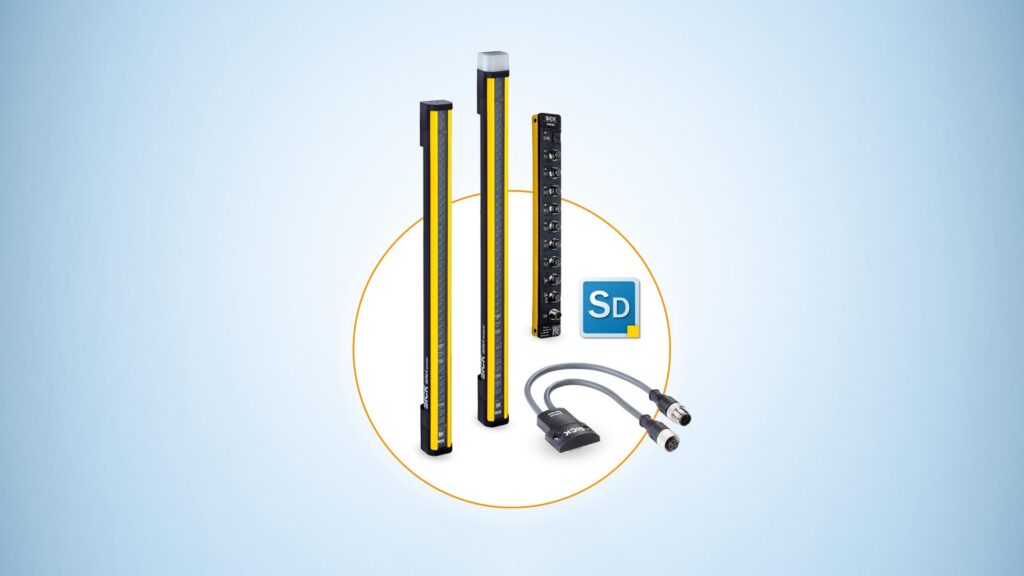
When used in conjunction with other DCM4-enabled features, such as object pattern recognition or Smart Box Detection, Reduced Resolution Advanced contributes to a multi-dimensional detection strategy. For instance, smaller objects, often below 150 mm, can be selectively permitted to pass through specific regions of the protective field under controlled conditions.
In this combined approach, Reduced Resolution Advanced governs how interruptions evolve over time and across beams, while complementary functions define spatial and dimensional constraints. The result is a comprehensive safeguarding solution that adapts to both the size and behavior of objects within the field.

The Future of Safety
The combination of deTec4 and the DCM4 extension module represents a significant advancement in safety light curtain technology for press brake applications. Through Reduced Resolution Advanced, the system introduces a controlled and configurable method for adapting detection behavior to real-world process conditions.
By enabling floating blanking with partial object monitoring, supporting multi-area configuration, and allowing precise control over ignored object size and quantity, RRA provides the flexibility needed for efficient material handling. At the same time, it maintains reliable detection of hazardous intrusion, ensuring that safety performance remains consistent.
This approach reflects SICK’s commitment to intelligent, application-driven safety solutions, where protection and productivity are no longer competing priorities, but fully aligned.