

Essential Output Logic Every Controls Engineer Should Know
Selecting the right output function on a photoelectric sensor can be the difference between a smooth-running machine and unexpected downtime. In this blog, we’re digging into one of the most fundamental, yet commonly misunderstood, concepts in sensor setup: Light Operate (LO) vs. Dark Operate (DO) switching.
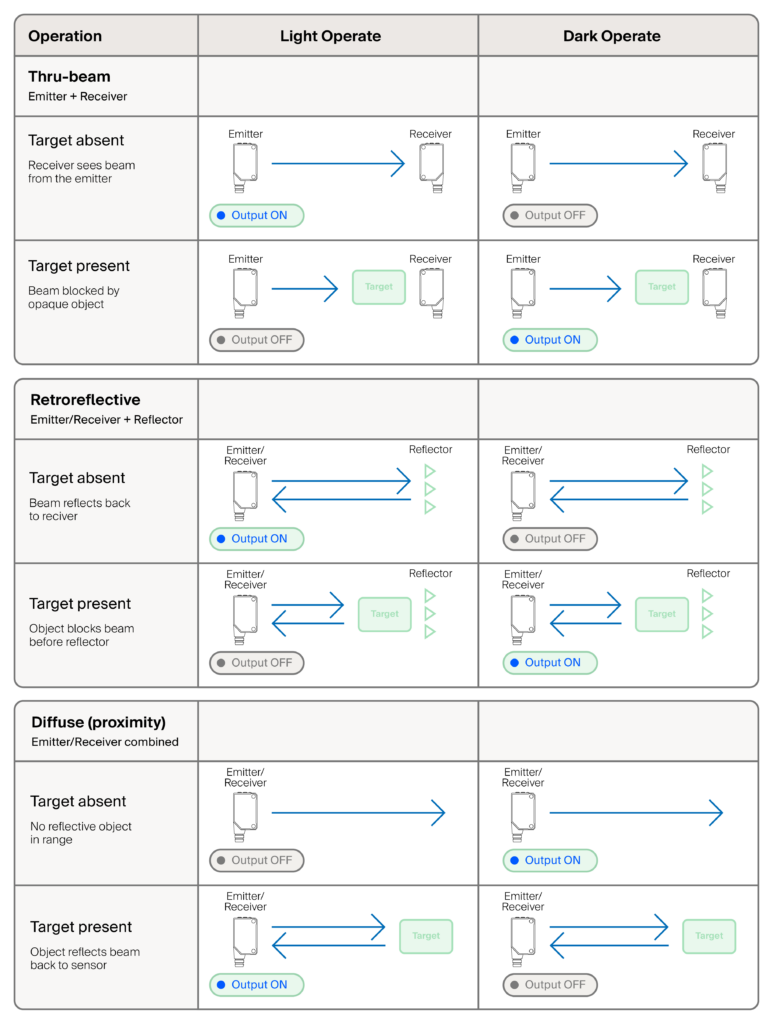
Light and dark switch modes are used to control when a photoelectric sensor’s output turns on, depending on whether the sensor is receiving light from a target or reflector. This is essential for how machines make decisions.
How Photoelectric Sensors Signal Target Detection
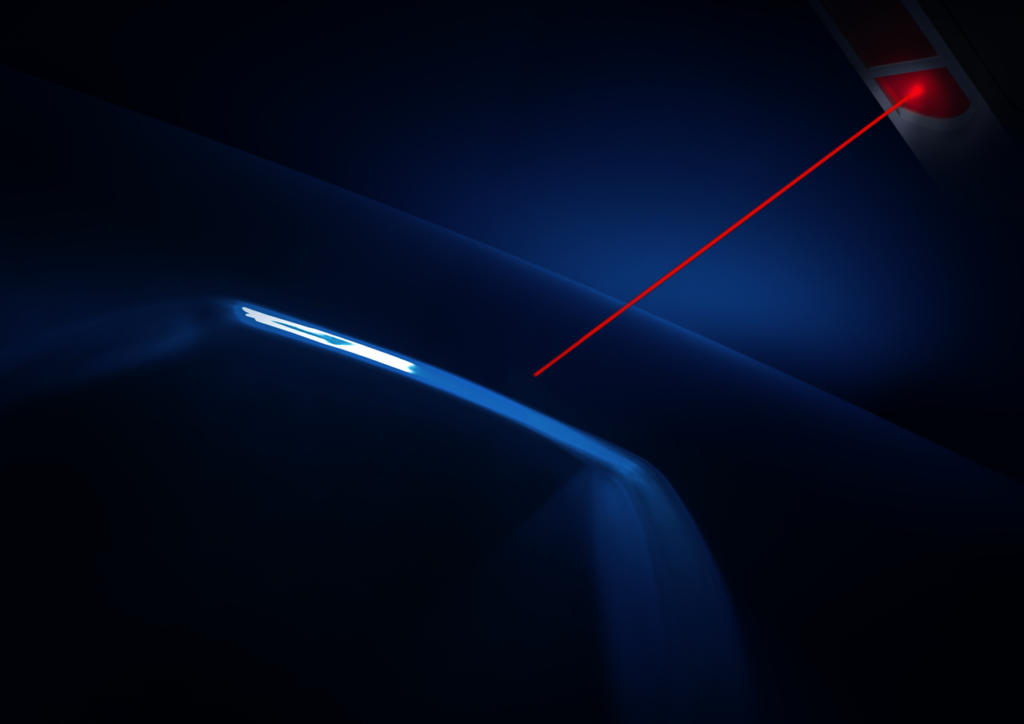
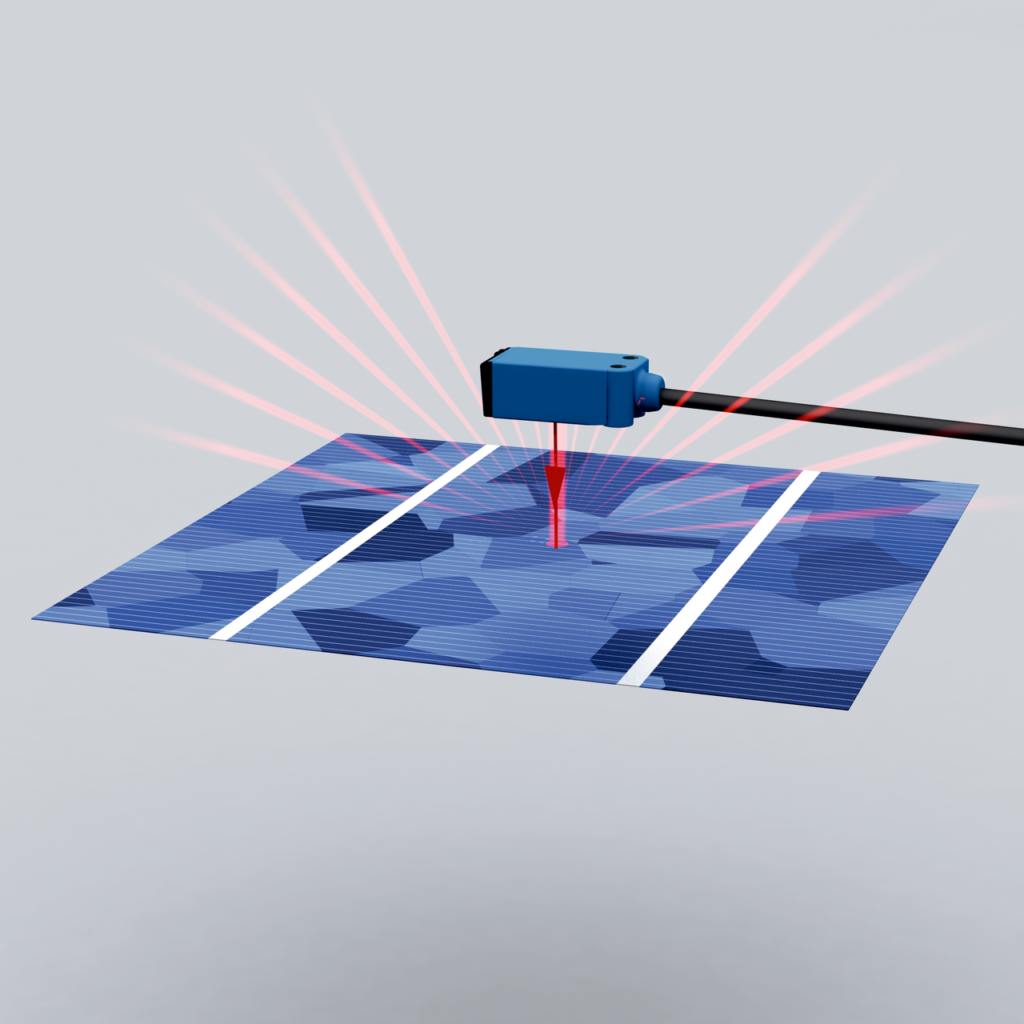
At the core, every photoelectric sensor works the same. It emits light and then evaluates the light that returns to determine whether a target is present. Once a target is detected, the sensor’s indicator LED turns on indicating a target is present.
But the behavior of the output wire that goes to the PLC or controller depends entirely on whether the sensor is set to Light Operate or Dark Operate.
Light Operate (LO): Output ON When Target Is Detected
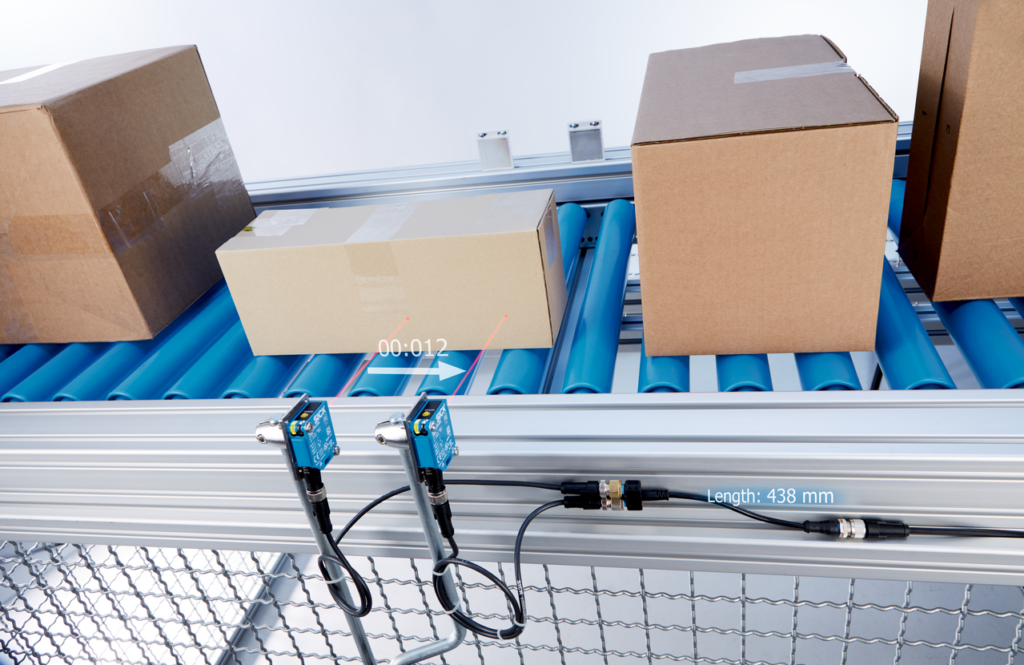
In LO mode, the sensor LED turns on when the target is present and the output wire/pin also turns ON. *
LO = Output ON / HIGH signal when the target is present*
This is straightforward and intuitive. The sensor “sees” the target and sends a high signal.
For example, with a sensor set to “L” or “Light Operate,” or Light Switching, placing a target in front of it causes the LED indicator to turn ON and the output wire/pin to go HIGH (e.g., lighting a test lamp or sounding a buzzer).
*Valid for energetic proximity type photoelectric sensors. Retro-reflector type sensors are different- see below.
Dark Operate (DO): Output ON When No Target Is Detected
In DO mode, the sensor LED still behaves the same, turning on when a target is detected. However, the output does the opposite; it turns off when a target is present.
DO = Output HIGH when the target is NOT present*
The output is on when the receiver is “dark” (not receiving light reflected from the target), which is where the term comes from. *
Why Choose Dark Operate? Fail‑Safe Logic Matters
At first glance, DO can feel backward. But for many applications, it’s the safer and more robust engineering choice.
Imagine a sensor is supposed to detect an obstruction so the machine can stop before a collision occurs. If you are using LO, the PLC waits for the output to turn on before stopping motion. If the sensor loses power, the output wire breaks, or the sensor fails…
the “stop” signal never arrives, and a crash ensues.
On the flipside, if you are using DO, the output is high during normal operation. It will only go low when a target soon to be crashed into is detected, the sensor fails, a wire breaks, or the sensor loses power. Any abnormal condition triggers a safe state.
This is why controls engineers often prefer DO. It’s inherently fail-safe.

How This Applies to Inductive Sensors
Inductive sensors use similar logic but with different terminology:
- Normally Open (NO) = behaves like a Light Operate Photoelectric Sensor
- Normally Closed (NC) = behaves like a Dark Operate Photoelectric Sensor
Same principle — different words.
*The LO/DO Logic Is Reversed in Retroreflective Sensors
This is the part that trips up many users. With proximity or background suppression sensors, seeing light = target present.
But with retroreflective sensors, the sensor sees light when the target is absent (because it’s reflecting off the reflector).
So, when no target is present → light returns from the reflector → sensor sees light. On the flip side, when a target is present → it blocks the reflector → sensor sees darkness.
Light Operate → Output ON when no target
Dark Operate → Output ON when target present
*This is the opposite of standard proximity-style photoelectric sensing. Critical to remember when selecting modes on conveyors or object detection applications.