Enhanced traffic insights with automated profiling solutions
In transportation, vehicle profiles aren’t just data points. They drive revenue, public safety, and operational efficiency. Yet many organizations still rely on legacy systems that misclassify vehicles, slow traffic, or introduce costly maintenance and lane closures. The result? Revenue leakage, compliance challenges, and unnecessary strain on infrastructure.
Ground‑sensing systems remain a mainstay for many agencies, but they come with well‑known drawbacks: lost tolls when loops fail, recurring repair costs, and lane closures that disrupt traffic. And in winter climates, the freeze–thaw cycles frequently damage in‑road sensors, making maintenance expensive and unavoidable.
Modern multi‑lane profiling systems are transforming how agencies and operators measure, classify, and understand vehicle traffic. By automating the process with LiDAR‑based technology, they provide the accuracy and reliability needed for today’s high‑demand environments.
The Power of Automated Vehicle Profiling
Accurate profiling does far more than ensure correct billing. It shapes how transportation agencies understand traffic patterns, manage infrastructure, and drive operational planning. But when profiling relies on manual checks or outdated systems, errors become inevitable, leading to misclassifications, lost revenue, blind spots in analytics, and preventable planning inefficiencies. Lane closures can mean missing toll collection and further operational losses.
Modern multi‑lane LiDAR profiling systems, like the SICK Multi‑Lane Profiling System (MLPS), eliminate those gaps by capturing precise vehicle profile and traffic data, even in free‑flowing or mixed traffic conditions. And without the need to embed devices into the road surface. These systems help agencies both protect revenue and reveal behavioral insights that weren’t previously measurable.

Introducing the Multi-Lane Profiling System from SICK
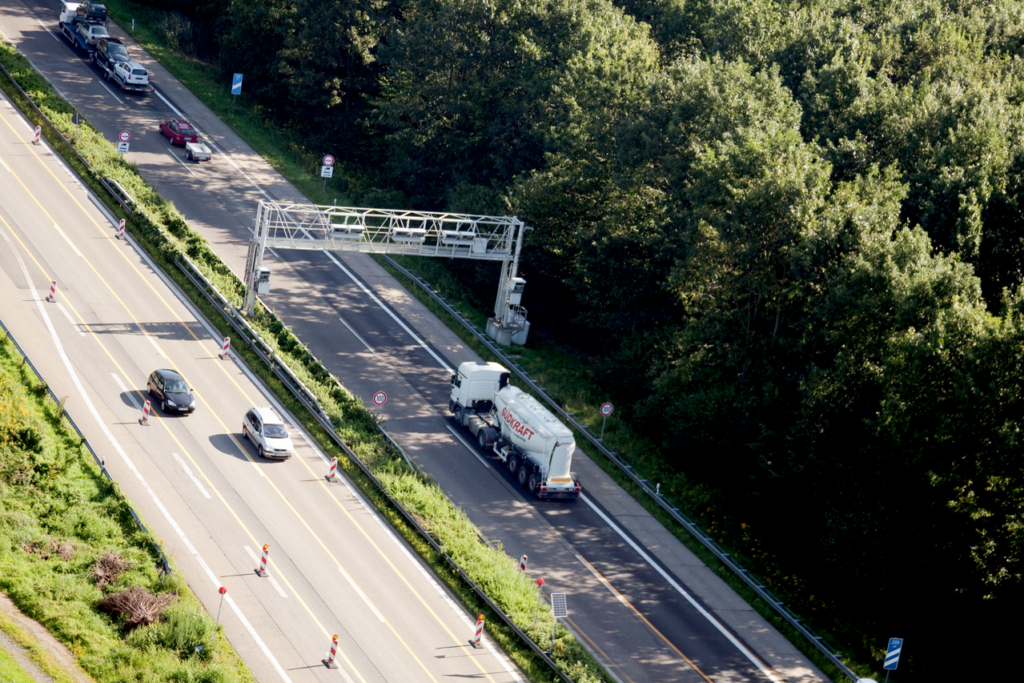
The SICK MLPS is a 3D LiDAR‑based solution engineered for robust vehicle profiling, classification, and tracking across multiple free‑flow lanes. A single high‑resolution multiScan 165 3D LiDAR sensor can cover up to two lanes, significantly reducing infrastructure compared to gantry‑heavy or in‑road systems. This overhead installation avoids roadway disruption and delivers precise lane‑level insight even in high‑speed, high‑density environments.
From its 3D point cloud, MLPS can:
- Classify vehicles using Deep Learning models such as Swiss10 or TLS8+1
- Determine exact lane position and movement direction
- Track vehicles as they change lanes
- Measure speed with high accuracy
Using continuous tracking, the system preserves each vehicle’s identity across lane shifts and ensures event‑driven synchronization for downstream systems.
These capabilities make MLPS an ideal fit for tolling and traffic management — anywhere that benefits from strong lane‑by‑lane visibility, reduced gantry requirements, and dependable integration with other systems.
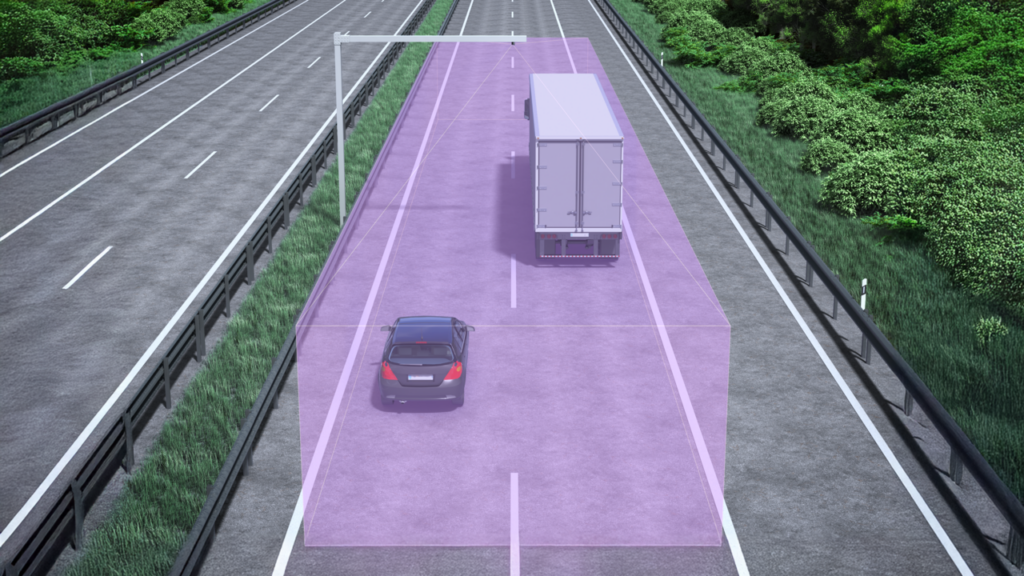
When Missing Classifications Hurt the Bottom Line
In tolling and other revenue‑dependent operations, even a small error in classification can produce financial and operational impacts. Missed or misclassifications lead directly to lost revenue or improper billing, especially in high‑volume environments where errors quickly compound.
SICK’s MLPS addresses this risk by capturing a complete, real‑time set of vehicle details — including lane position, direction, classification, and speed — and transforming them into precise 3D vehicle profiles. It maps the vehicle and determines the type of vehicle and other details. These data points help agencies verify compliance with legal or safety requirements without interrupting traffic or relying on roadside manual checks.
If operators want to further enhance this, they can incorporate additional solutions from SICK that include cameras for multi-lane axle counting, thermal cameras for detecting overheated components for safety enforcement, and multiple LiDAR sensors for detailed vehicle dimensions profiling.
These systems also transform compliance efforts. Automated profiling verifies that each vehicle meets legal or safety requirements—without human intervention, stopping traffic, or relying on equipment embedded in the road.
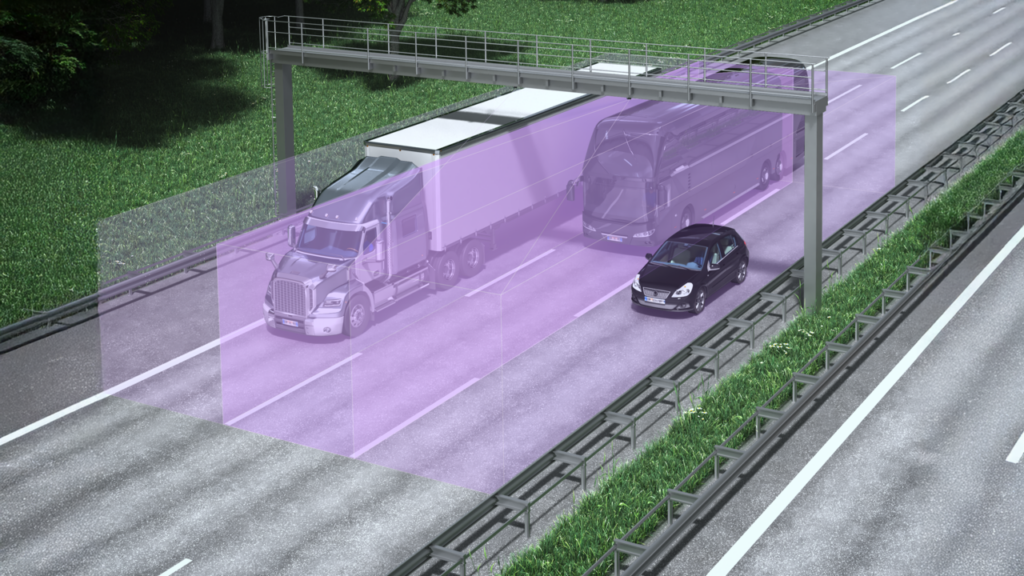
Why Automated Profiling Is More Reliable
Unlike in‑road systems, LiDAR‑based profiling installs above the roadway, making it far less vulnerable to weather, moisture, or road surface degradation.
SICK’s MLPS reduces infrastructure demands by covering two lanes with a single sensor and by providing accurate detection even in challenging scenarios such as lane changes or dense traffic. They operate without interfering with traffic flow and scan vehicles at extremely high frequencies, up to 40 scans per second in some SICK systems.
Continuous 3D tracking allows the system to maintain vehicle identification during lane shifts, something camera‑only systems often struggle with. And because MLPS is modular and scalable, operators can expand or adapt layouts to fit specific multiple lane configurations without overbuilding infrastructure.
A study from the University of Leeds found that cameras struggle with low light, fog, rain, and snow. Any visibility degradation leads to reduced positional accuracy, which can cause occlusion issues that affect their ability to maintain consistent target tracking. This directly confirms that camera-only systems often fail to maintain reliable tracking, especially when vehicles shift position or cross lanes.
These capabilities are possible with multi‑echo LiDAR technology that enables the use to configure filter settings to address weather conditions. This allows the system to detect lane shifts, closely spaced vehicles, and multi‑class traffic even in adverse weather conditions.

Profiling Systems Capture Traffic Behavior You Can’t See
Profiling isn’t just about identifying what vehicles are on the road. It’s about understanding how they move.
It records how vehicles move within and between lanes, how closely spaced they are, and how traffic transitions between free‑flow and stop‑and‑go states. It synchronizes each vehicle’s movement with time‑stamped signals that can feed ALPR, OCR, or inspection systems.
These insights help transportation planners identify bottlenecks, evaluate lane utilization, and optimize roadway or facility layouts, without installing or maintaining equipment in the ground.
Protecting Revenue with Better Classification
Revenue recovery has become a strategic priority for tolling agencies, weight‑restricted crossings, and other agencies. Automated profiling helps close the gaps that manual or outdated systems often leave open.
With deep-learning–based classification, MLPS supports standards like Swiss10 and TLS8+1 with high consistency. When combined with SICK’s broader profiling ecosystem, including axle counting, hot‑spot detection, and integrated ALPR/OCR, operators gain a complete, reliable classification workflow that improves fairness, safety, and revenue accuracy.

A Smarter Way to Ensure Accuracy
Incorrect profiling doesn’t need to be an unavoidable cost. Automated profiling ensures consistent, repeatable accuracy that reduces revenue leakage, improves compliance, and enhances overall roadway intelligence.
With systems like the SICK MLPS, organizations gain reliable, scalable, and maintenance‑friendly profiling, without increasing gantry requirements or deploying in‑road hardware. The result is clear: better data, fewer errors, and more confident decision‑making, all while keeping traffic moving smoothly.