
A Vision‑Guided Picking System Powered by Blue Onyx, SICK, and KUKA
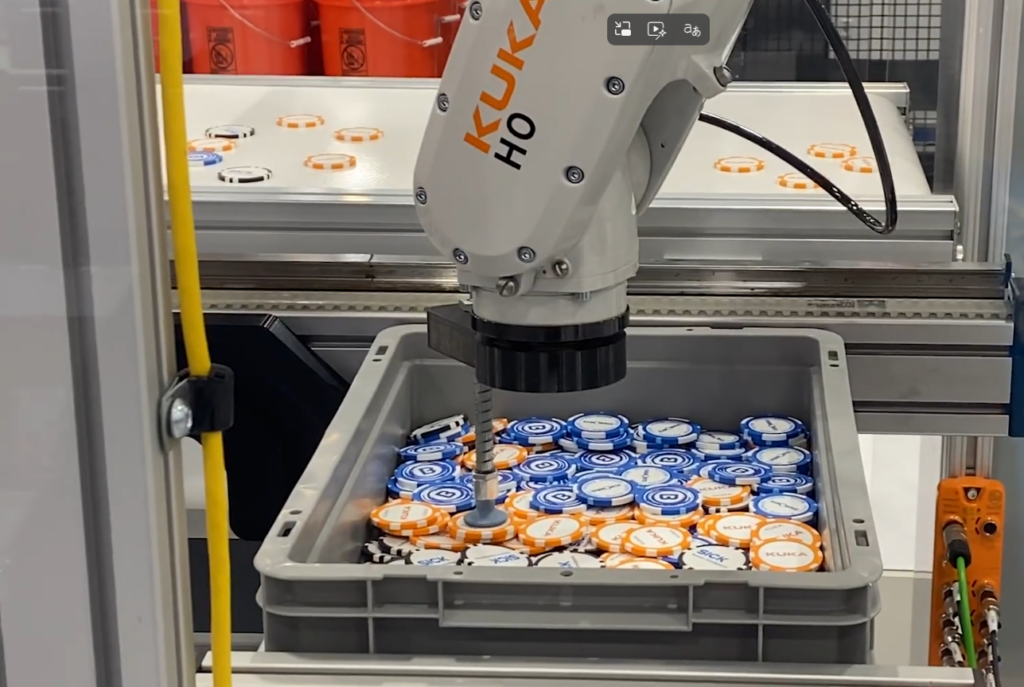
Blue Onyx Systems has built its reputation on creating automation that feels approachable, reliable, and genuinely helpful to manufacturers. They aren’t just integrating robots. They’re solving real production problems with thoughtfully engineered systems. Today, one of their standout offerings is a turnkey robotic picking and sorting cell powered by SICK vision technology and KUKA robotics.
The trio of companies had one main goal: automate the kinds of picking and sorting tasks that usually slow people down. This results in more accurate and reliable bin picking, tote picking, and order fulfillment of assembly pieces and parts.
The Companies Behind the System
SICK is one of the world’s leading manufacturers of industrial sensors and machine vision solutions, known for shaping modern factory automation, logistics, and process control through intelligent sensor technology.
Blue Onyx is a U.S.-based automation integrator specializing in robotics integration, machine vision, control systems, and turnkey automation.
KUKA is a global leader in industrial robotics and factory automation. Their robots are widely used across industries ranging from automotive to aerospace, electronics, logistics, and more.
Together, these three companies create a powerful combination: SICK brings the vision intelligence, KUKA delivers the motion, and Blue Onyx does the engineering that ties everything together.
A System Designed for Real‑World Production
Blue Onyx’s ready‑to‑deploy picking solution is built for facilities that need to move from messy input to organized output with minimal operator intervention. Instead of expecting parts to arrive perfectly oriented, the system embraces the reality of most production floors. Items come in totes, bins, or piles, and someone needs to sort through it all.
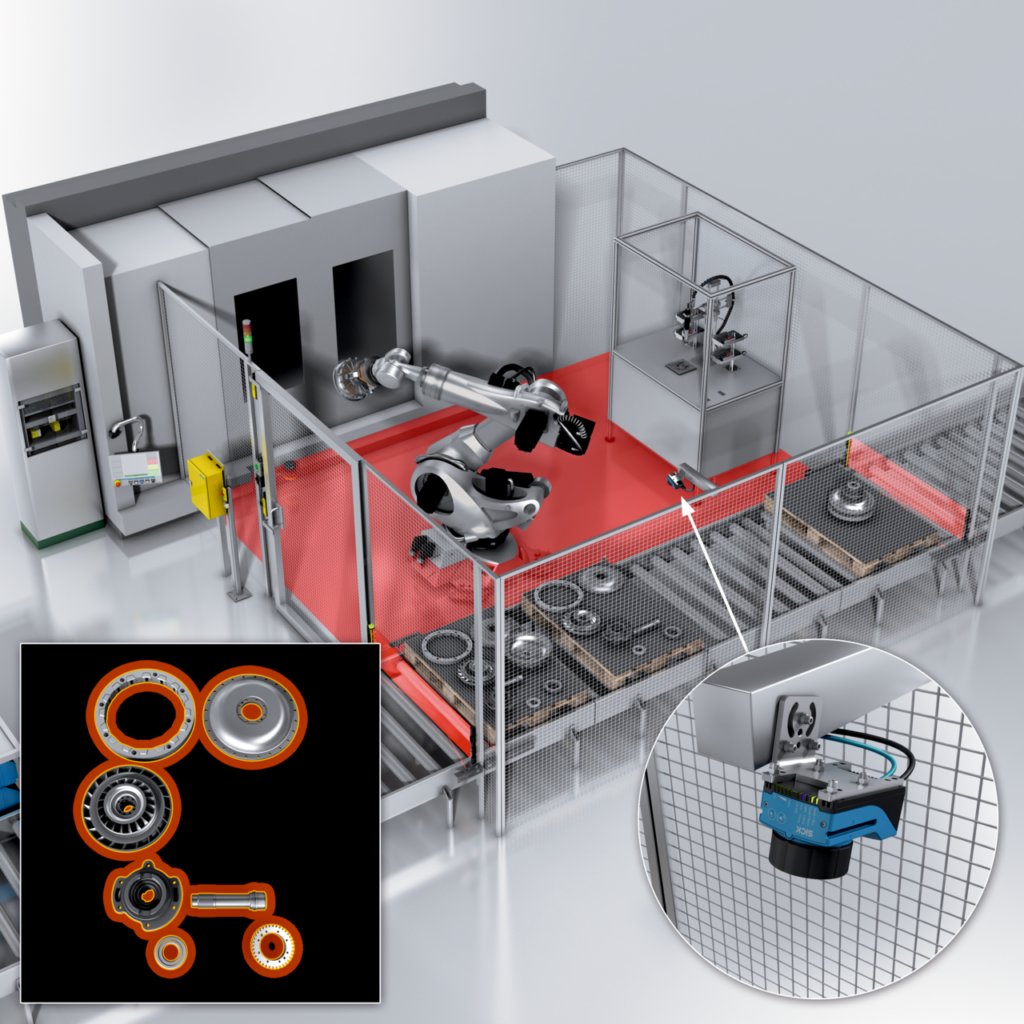
“The system works with the robot guidance systems from SICK. This includes the PLB 3D vision system for random bin picking and the PLOC2D vision system for sortation of different items,” said Sharon Richu Shaji, Systems Application Engineer at SICK. “The robot also utilizes SICK safety laser scanners to provide the machine and workers protection.”
How it Works
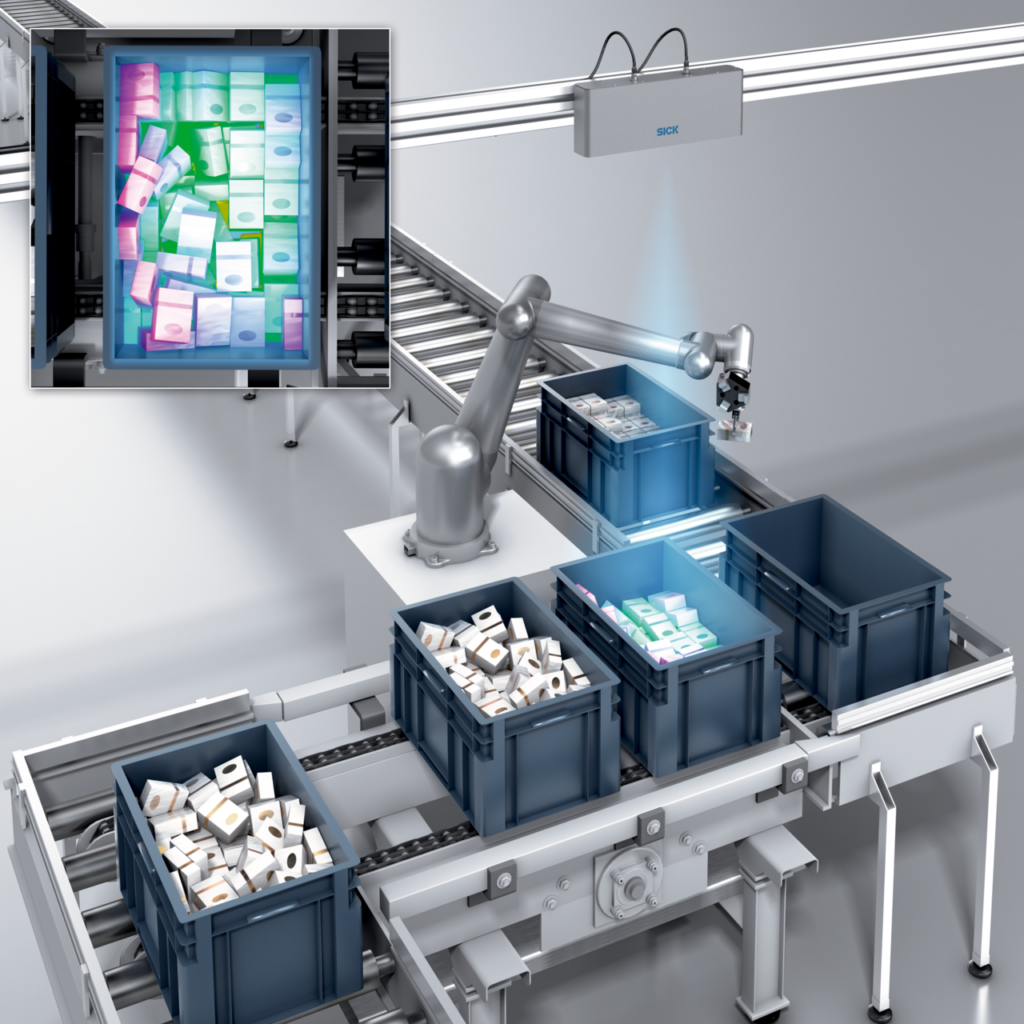
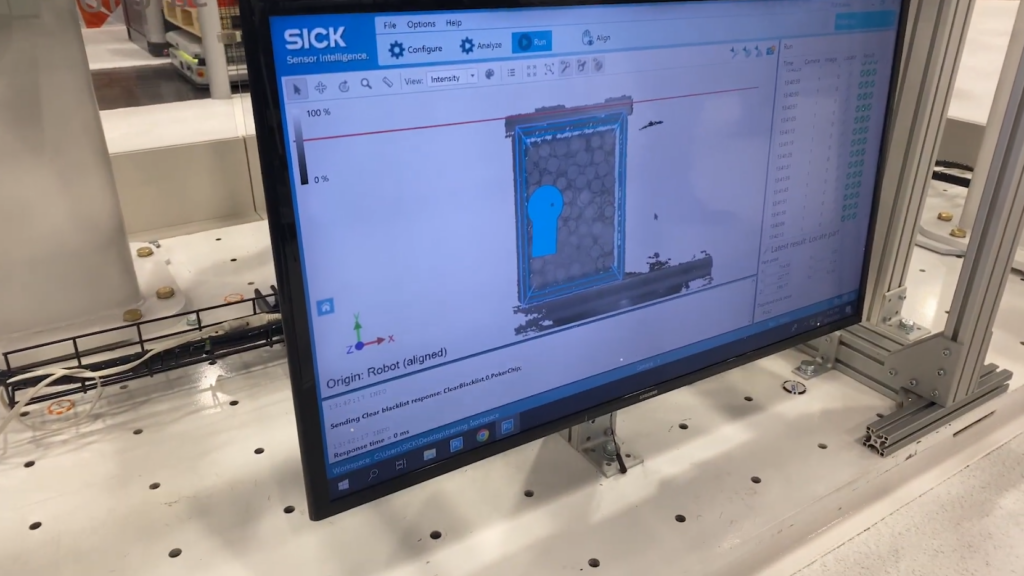
Using SICK’s PLB 3D robot vision system, the robot identifies items in a random bin, even if they’re stacked, tilted, or overlapping. The vision system calculates precise coordinates and orientation data, then sends that directly to the KUKA robot controller. With Blue Onyx’s integration work, the robot handles each pick confidently and repeats it accurately shift after shift.
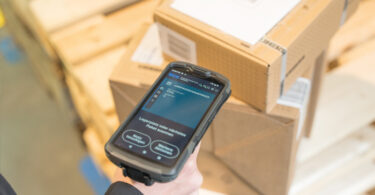
What makes the system appealing is how little fine‑tuning it requires. Operators use a simple interface to select the item type or quantity they need, and the system handles the rest.
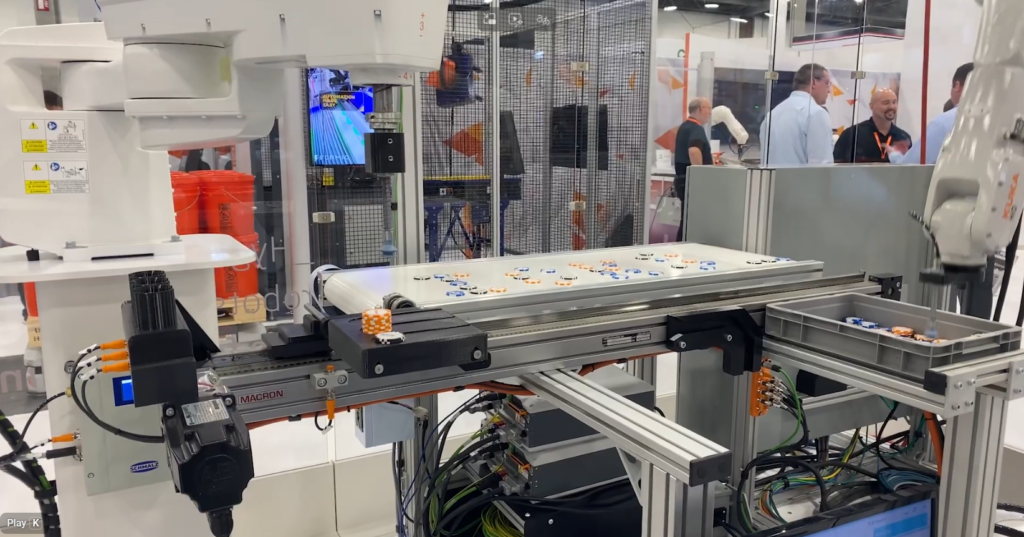
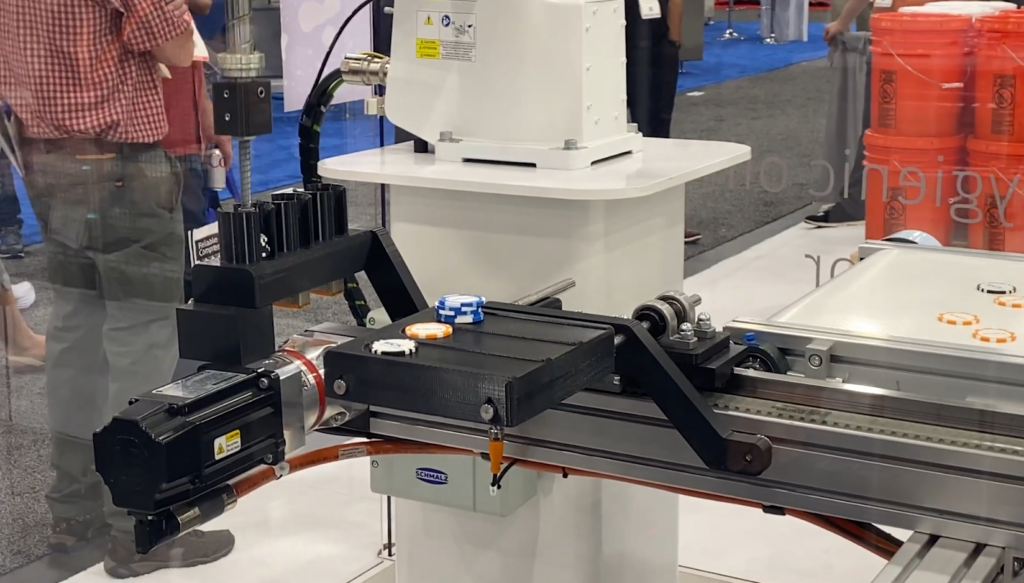
In a demo presented at PackExpo 2025, Blue Onyx discussed the benefits of this system with a demonstration using poker chips to simulate items often seen in production environments.
“The robot finds the correct poker chips and the correct number of chips, then places them on a conveyor,” said Brian Brisch, Vice President of Sales at Blue Onyx. “This simulates what you’d see in a random bin picking or tote-picking application.”
After the first robot places items onto the conveyor, the second stage takes over. A KUKA SCARA robot uses SICK’s 2D vision, the PLOC2D, to identify, sort, and organize items on the fly. It’s fast, precise, and built to handle high‑throughput environments.
This combination of 3D picking followed by 2D inspection and sortation allows the system to handle everything from mixed‑color components to assorted product SKUs. Blue Onyx engineered the cell so each stage hands off cleanly to the next, keeping operations smooth and predictable.
Where the Magic Happens: Communication
A major enabler of the system’s speed and simplicity is the direct communication channel between SICK vision systems and KUKA robot controllers. Using KUKA.Ethernet KRL, the robots receive coordinate data in real time. It is a communication method that lets SICK’s vision systems send coordinate data directly to KUKA’s robot controllers. No extra hardware, no middleware, no complicated messaging layers.
The vision system calculates exactly where the robot should go, and the robot moves immediately. This real‑time communication is a game changer for integrators looking to keep systems fast, simple, and responsive.
“SICK calculates the exact coordinates and communicates them directly to the KUKA controller. The robot can execute immediately and move on to the next job,” said Rich Parkhurst, Account Manager at KUKA.
Why This Matters Beyond the Poker Chips
Although the PackExpo demo used poker chips for fun, the underlying workflow represents countless real industrial applications. Manufacturers and fulfillment centers face daily challenges involving unstructured materials, including random bins, mixed parts, changing orders, and increasingly complex demands.
By combining SICK’s sensor intelligence, Blue Onyx’s integration expertise, and KUKA’s versatile robotics platform, the team created a compact system that:
- picks items from chaotic environments
- identifies and sorts them accurately
- hands off tasks cleanly between robots
- works off real‑time vision‑robot communication
- stays simple to program and easy to deploy
What the demo really showed is that you don’t need massive custom engineering to solve these challenges. With the right tools working together, it can be straightforward, scalable, and surprisingly elegant.
Integration Experience
Blue Onyx found the integration between SICK and KUKA to be straightforward. This collaborative solution demonstrates how powerful and intuitive vision‑guided robotics can be when SICK’s 2D and 3D guidance systems are paired with KUKA’s robotic platforms. By leveraging real‑time Ethernet KRL communication and simple integration tools, Blue Onyx created a robust, scalable, and production-ready automation cell.
“The SICK cameras are very easy to use. They integrate seamlessly with the KUKA robots,” Brisch said. “From setup to programming, it made it simple to pull all three technologies together.”
The result is a flexible system capable of handling unstructured materials with speed, accuracy, and minimal engineering overhead—ideal for any operation looking to modernize its picking and sorting processes. This ease of use is a major benefit for system integrators looking to deploy advanced automation quickly without heavy custom code.