
How Customized Absolute Encoders Ensure Reliable, Precise Imaging in Critical Surgical Procedures
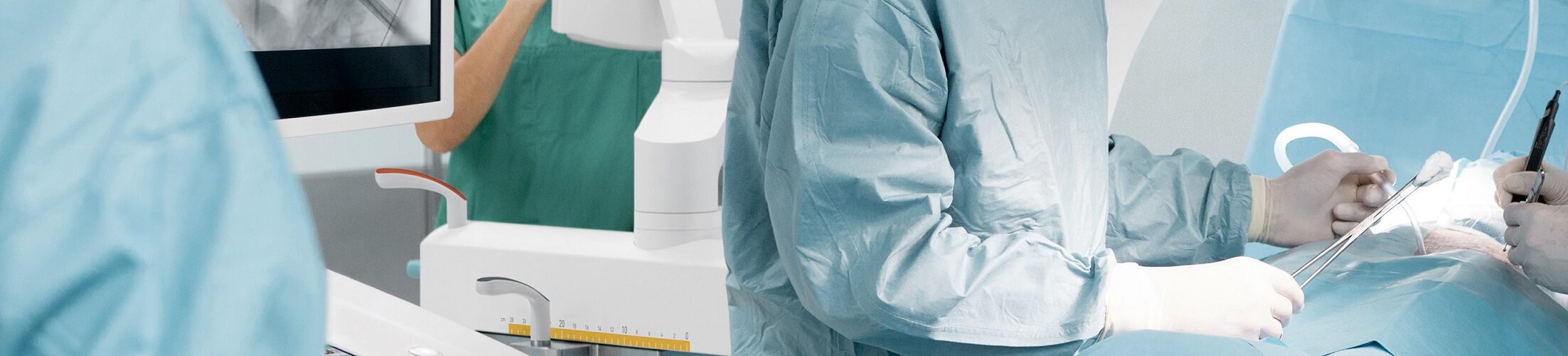
When surgeons need a clear view inside the human body, advanced imaging systems make it possible to visualize tissues, structures, and functions in real time. One such innovation is the mobile C-arm from Ziehm Imaging, which leverages cutting-edge X-ray technology to deliver accurate and efficient intraoperative imaging.
To prevent a small component from causing major disruptions during surgery, Ziehm Imaging relies on a customized absolute encoder solution from SICK. This partnership ensures that the C-arms operate with maximum reliability—even under challenging conditions.

Ziehm Imaging: A Pioneer in Mobile Imaging
Founded in Nuremberg in 1972, Ziehm Imaging specializes in designing and manufacturing mobile X-ray-based imaging systems that enhance surgical workflows. Their C-arms, named for their distinctive shape, can be maneuvered around the patient during procedures—without the patient noticing—providing flexibility and superior image quality.
Devices like the Ziehm Vision RFD Hybrid Edition offer exceptional mobility and clarity, helping surgeons achieve optimal outcomes. Today, more than 22,000 C-arms are installed in over 80 countries, with approximately 1,500 new units added annually. These systems are widely used in spinal surgery, orthopedics, vascular procedures, and increasingly in bronchoscopy and oncology.
“Our C-arms are not only used in spinal surgery, orthopedics and traumatology but also in vascular surgery and, increasingly often, in the areas of bronchoscopy and oncology, thereby satisfying the most stringent clinical requirements. Hospitals benefit from the low installation costs, the low radiation dose, and the high level of flexibility thanks to the mobility of the C-arms,” said Martin Ringholz from Ziehm Imaging.
Formerly a product manager and now serving as Director of Global Marketing for mobile C-arms, he brings deep expertise in intraoperative imaging technology—along with a thorough understanding of its technical demands and everyday challenges. Chief among these challenges is ensuring uninterrupted performance in the operating room.
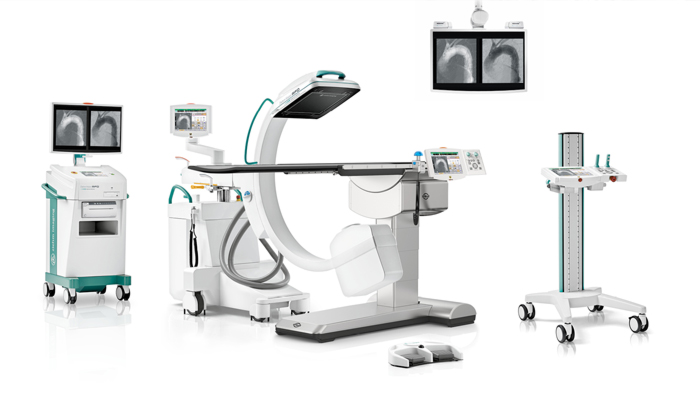
The Challenge: Battery-Dependent Encoders
In 2023, Ziehm Imaging faced reliability concerns with their previous multiturn encoders, which relied on internal batteries to track rotations during power interruptions. If the battery failed, especially after long storage periods or exposure to harsh conditions, the encoder could no longer provide accurate position data. For critical surgeries, such as cardiac procedures, this was unacceptable.
“Since our C-arms can be moved by servomotors and manually, if necessary, the absolute position of the C-arm needs to be sent immediately to the device controller each time the motor is switched on again,” Ringholz said. “The physician expects the full functionality of the C-arm to be available while an operation is in progress since, for example, operations on the heart can be highly critical for the patient's survival. Medical technology needs to perform uncompromisingly and without distracting from the treatment.”
The C-arms do indeed operate with the utmost reliability most of the time in normal clinical practice – the battery failures occurred in particular after long periods of non-use of the C-arms, when a replacement encoder was stored for a long time in a spare parts warehouse, or when encoders had to cope with transport or storage in climatically demanding conditions.
The Solution: AFM60 SSI Absolute Encoder
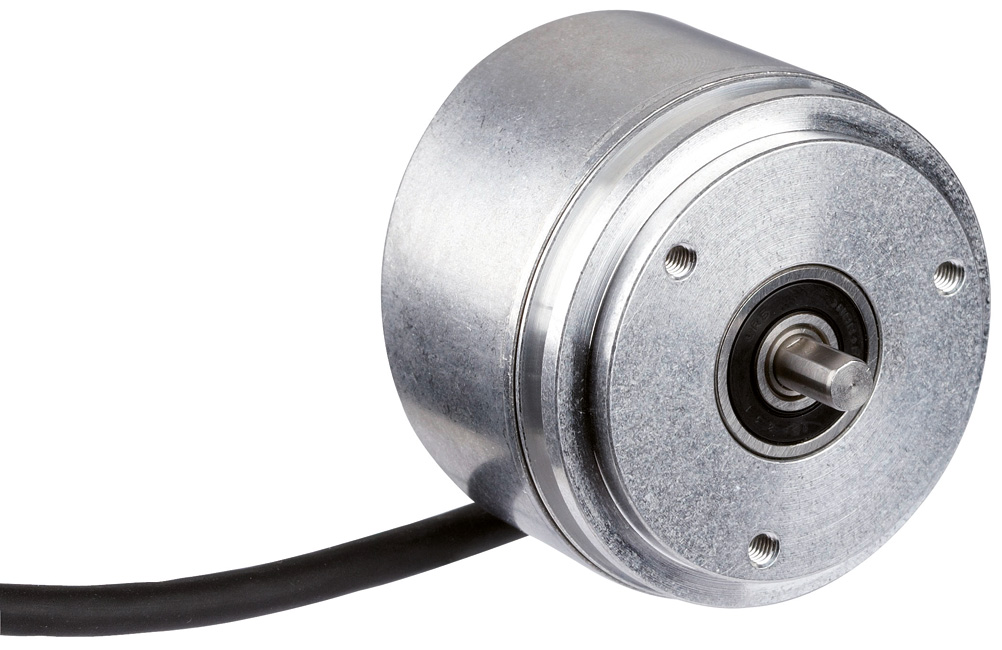
SICK addressed this issue with the AFM60 SSI absolute encoder, eliminating battery dependency by using a robust mechanical multiturn system. This encoder delivers:
- High resolution up to 30 bits
- Excellent concentricity and compact design
- Consistent performance regardless of downtime or environmental factors
According to Ziehm Imaging, this upgrade ensures smooth, precise C-arm movements during surgery, allowing surgeons to verify results immediately—without delays or interruptions.
“In particular, however, it uses a rugged mechanical drive for the multiturn counting and operates with the same consistent reliability regardless of periods of non-use and ambient conditions,” said Martin Hummel, product manager at SICK.
Ringholz confirmed that the high resolution and measurement accuracy are ideal for the demanding application in C-arms.
“Thanks to this feature, the surgeon can, for example, use the Ziehm Vision RFD Hybrid Edition C-arm to perform smooth, fluid movements with no shuddering or after-vibrations and position the C-arm accurately for intraoperative imaging. This makes it possible, for example, to already verify the surgery results during the procedure.”
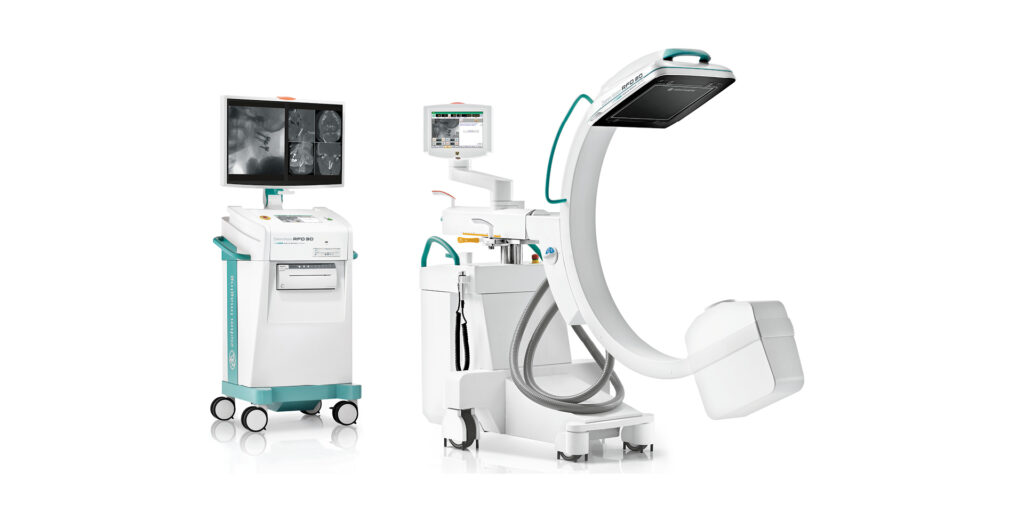
The mobile C-arms use advanced X-ray-based technologies to ensure a precise and efficient intraoperative visualization.
Customization for Maximum Value
Beyond reliability, SICK provided a tailored solution for Ziehm Imaging. It was not only the functionality of the AFM60 SSI that impressed Ziehm Imaging, but also the possibility of a customer-specific configuration.
The Ziehm Imaging encoder, of which up to four are used per C-arm, was given a connecting cable pre-assembled to a custom length with a Molex plug as well as a customer-specific label specifying the firmware version of the encoder and bearing important product and medical technology related details for identification and traceability.
SICK’s customization capabilities include options for connectors, cable lengths, mounting patterns, shaft designs, and even software configurations—ensuring every encoder meets the unique demands of medical technology.
“In actual fact, customizing is one of our strengths because the ideal customer benefit is often only achieved with application-specific individualization,” Hummel said.
And the range of customization options is quite impressive: plugs, cable connections, cable lengths, wire and pin assignments, adapter flanges, mounting hole patterns, stator couplings, shafts of different lengths, diameters and designs, electrical interfaces with customer-specific parameterization and communication interface or software – and, of course, combinations of these.
By replacing battery-dependent encoders with SICK’s AFM60 SSI, Ziehm Imaging has enhanced reliability, precision, and flexibility in operating rooms worldwide, helping surgeons deliver better outcomes for patients.