

A new era for warehouse productivity with robotic bin picking and part localization
Warehouses and distribution centers across North America continue to face persistent labor shortages, especially in roles that require repetitive manual tasks like order picking. To keep operations efficient, many organizations are turning to automation, specifically Physical AI, an emerging class of intelligent robotic systems designed to handle real‑world tasks autonomously.
One standout example is SICK’s Physical AI, robotic picking solution, Part Localization in Bins (PLB). At SICK’s Buchholz facility, PLB is already transforming day‑to‑day fulfillment: despite managing more than 40,000 active SKUs, the system autonomously processes roughly 500 orders every day, supporting multi‑shift operations with consistent accuracy.
By combining advanced 3D vision technologies with machine‑learning–based object recognition, PLB reduces manual strain on employees, boosts speed, and positions logistics operations for a scalable, automated future.
Why High‑Mix SKU Environments Need Physical AI
One of the biggest hurdles preventing automation in North American warehouses is item variability. Products differ in shape, size, material, and packaging. And traditional robotics struggles in these conditions.
Physical AI changes that equation.
SICK designed PLB to handle diverse items without pre-training. The system evaluates each piece in real time, detecting shape, color, and orientation, then automatically determining the best pick point. This makes it ideal for high‑mix, low‑volume operations where conventional automation has historically failed.
By offloading repetitive tasks to Physical AI systems, companies can redeploy workers to more specialized roles, critical as the shortage of skilled labor continues to grow.
Physical AI at Work: Real-World Performance at SICK
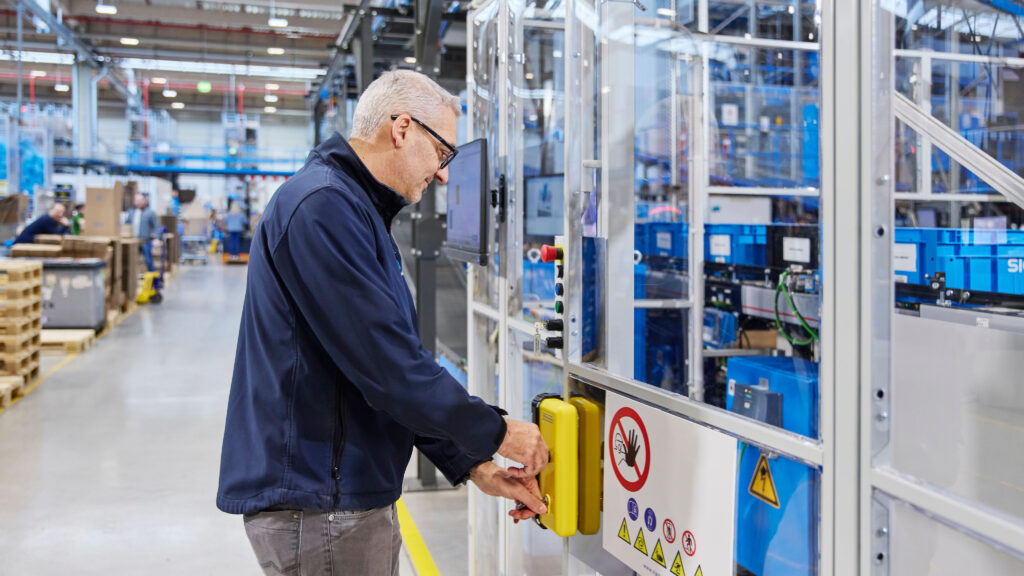
At SICK’s Waldkirch‑Buchholz site, the PLB robotics platform was integrated directly into the existing distribution setup.
“The implementation process was much faster than expected. The system was installed, integrated, and running within weeks,” said Michael Anders‑Rapp, Solution Consultant at SICK AG.
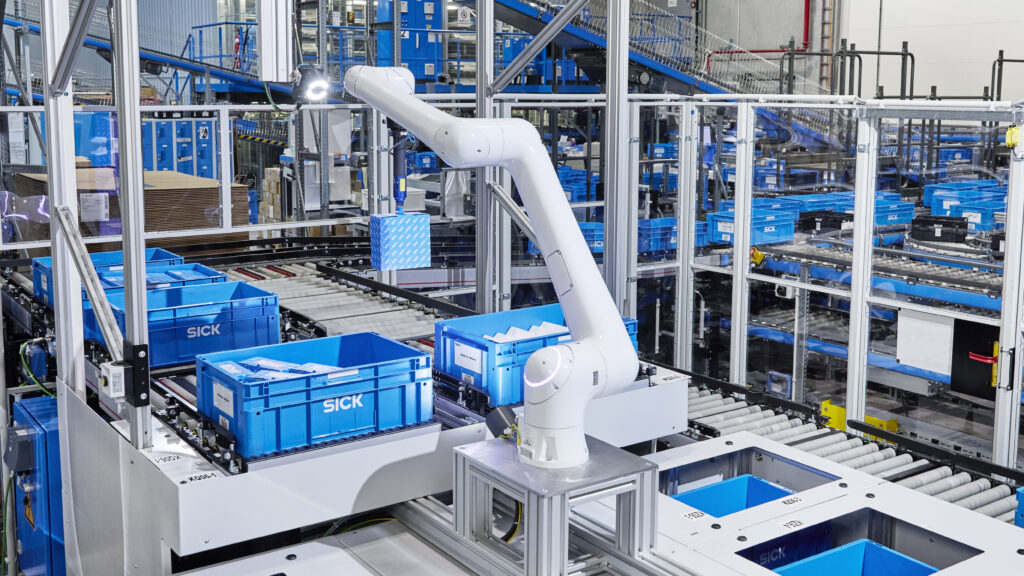
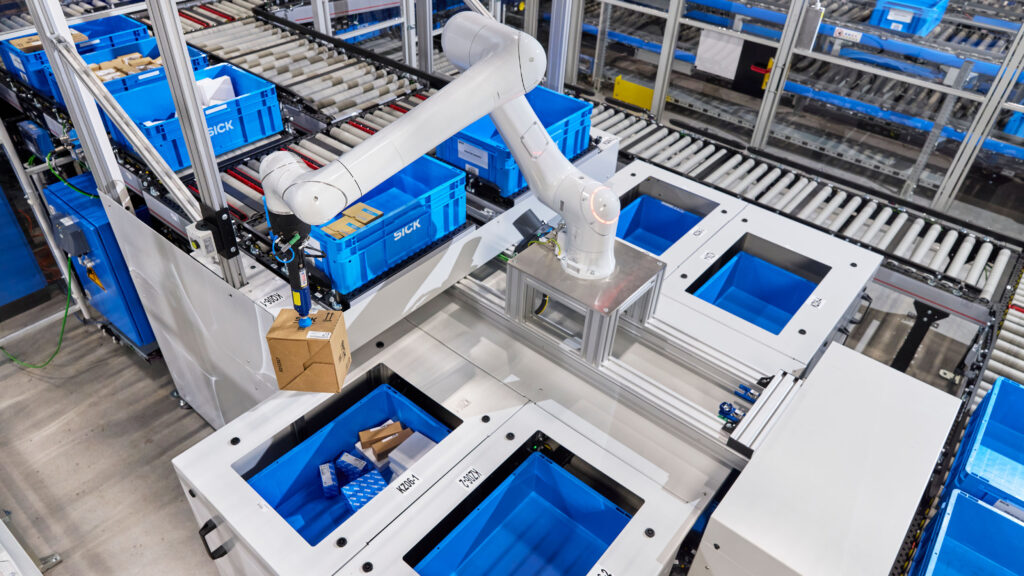
The robot autonomously picks items from two source bins and distributes them into four destination bins, replicating the workflow of a manual pick station but operating entirely without human involvement.
Current throughput is around 1,000 single picks per day, with a near‑term goal of increasing performance to 200–400 picks per hour, or 3,000–6,000 daily. The long‑term vision includes 24/7 robot operations to maximize reliability and efficiency.
Even now, the system delivers measurable benefits: reduced physical strain on employees, consistent pick quality, fewer errors, and greater operational stability in the face of labor shortages.
Advanced Sensors = Reliable Automation
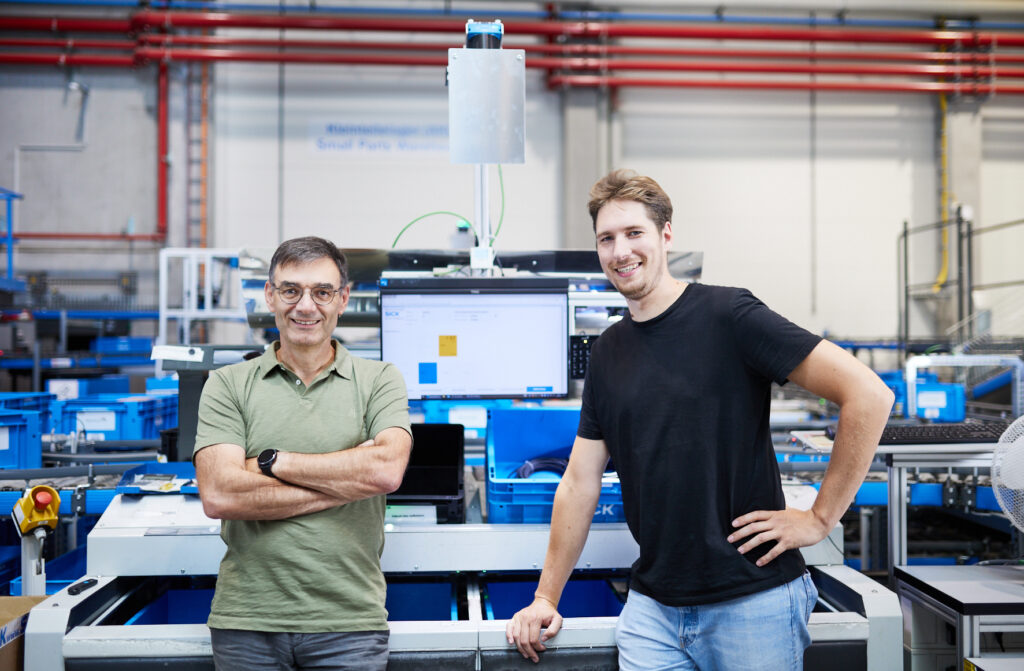
To maintain accuracy and ensure smooth material flow, the setup uses two picoScan100 2D LiDAR sensors. With a 270-degree scanning angle and up to 25 meters of range, they:
- Monitor container fill levels
- Prevent overflows
- Ensure correct item placement
- Maintain performance even with glare or dust present
This sensor intelligence is essential for high‑reliability robotic workflows.
Safety + Vision: The Core of Physical AI
Safety remains tightly integrated into the system. The robot cell is fully enclosed and protected with a TR4 safety switch, while safety‑critical signals are monitored by a certified PLC that complies with EN ISO 13849‑1.
On the vision side, PLB uses 3D cameras and Physical AI algorithms to locate every item and determine the correct gripping point—regardless of size, color, or orientation.
Two Lector85x image-based code readers support traceability through precise barcode capture.
Together, these components make the system scalable, adaptable, and dependable.
Unlocking Workforce Value and ROI
“Robotic–driven picking allows us to retrain employees for roles in fast‑growing service areas and value‑added activities,” said Michael Baumer, Head of Warehouse Distribution Logistics at SICK AG.
From an investment standpoint, SICK reports that the ROI becomes attractive even with the first deployed robot.
Adopting Physical AI isn’t just an operational improvement. It’s a strategic advantage. As demand for reliable, rapid order fulfillment increases, companies that implement Physical AI solutions like PLB will be better positioned to compete in a fast‑moving market.