

How SICK sensors help Built Robotics’ robotic autonomous piling system come to life to drive pile to help build solar farms
Global solar deployment continues to surge, with installation numbers breaking records year after year. And projections show strong momentum well through 2030. To support this explosive growth, Built Robotics has developed autonomous technologies that rely on SICK sensor solutions to streamline one of the most time‑consuming steps in solar construction: installing the pile foundations that hold each panel in place.
According to the International Energy Agency (IEA), more than 80% of countries are expected to accelerate renewable energy adoption between 2025 and 2030 compared to the previous five‑year period. The IEA also anticipates that nearly 600 GW of new solar PV capacity will be added worldwide in 2025 alone, largely fueled by the increasing scale of utility‑level projects.
To keep pace with this rising demand for solar-generated power, Built Robotics engineered an automated piling system designed specifically for large, utility‑scale solar sites. Staying true to its mission—building robots that build the world—Built Robotics is helping close labor gaps across the $300‑billion solar sector. By automating repetitive, labor‑heavy tasks, the company is helping accelerate global progress toward clean, sustainable energy.
Construction Process
Building a solar farm involves far more than installing panels. Everything starts with creating a reliable foundation. In utility‑scale projects, that foundation is made up of solar piles: long steel beams or tubes that are driven deep into the soil to anchor large solar panel arrays. These piles keep the entire array secure, resisting wind loads, shifting terrain, and other environmental forces.
The installation sequence begins with detailed site preparation, using survey data or GPS coordinates to map out exactly where each pile must go. Once locations are marked, steel piles are positioned and driven into the ground with hydraulic or vibratory hammers until they reach the specified depth, typically ranging from 6 to 12 feet.
Modern construction approaches are increasingly turning to automated equipment to improve consistency and throughput. Robotic pile‑driving systems, such as those engineered by Built Robotics, combine positioning, navigation, and driving operations into one autonomous workflow. Using advanced sensors and GPS guidance, these robots place piles with high precision and significantly reduce manual labor steps.
After installation, crews perform verification checks to ensure piles meet depth, alignment, and engineering requirements. This quality‑control phase confirms that the foundations are properly set and ready to support the mounting hardware and solar panels that follow.
Challenges in the Construction Process
Installing solar piles brings a unique set of technical demands. Each pile must be placed with exact precision, aligned in straight, consistent rows, spaced accurately, and driven to the correct depth. The equipment used must also withstand punishing conditions, including extreme vibration, repeated impact forces, and high temperatures. These factors require highly durable sensing technology capable of staying accurate even under significant mechanical stress.
Despite advancements in automation, a large portion of solar pile installation is still performed by hand, particularly on smaller job sites or in areas where robotic systems haven’t yet been widely implemented. Manual installation tends to be slower, more labor‑intensive, and more vulnerable to misalignment or measurement errors. These limitations make it less efficient than autonomous methods, but manual approaches remain common when project budgets, terrain challenges, or limited site scale reduce the feasibility of automated solutions.
Traditional crews generally complete around 100–150 piles per day, depending on conditions. This process often relies on basic tools and human judgment, which can introduce variability and require additional safety oversight and labor. Robotic solutions, on the other hand, can match or surpass those production rates while delivering better uniformity, minimizing mistakes, and compressing project timelines. They also significantly reduce exposure to jobsite hazards.
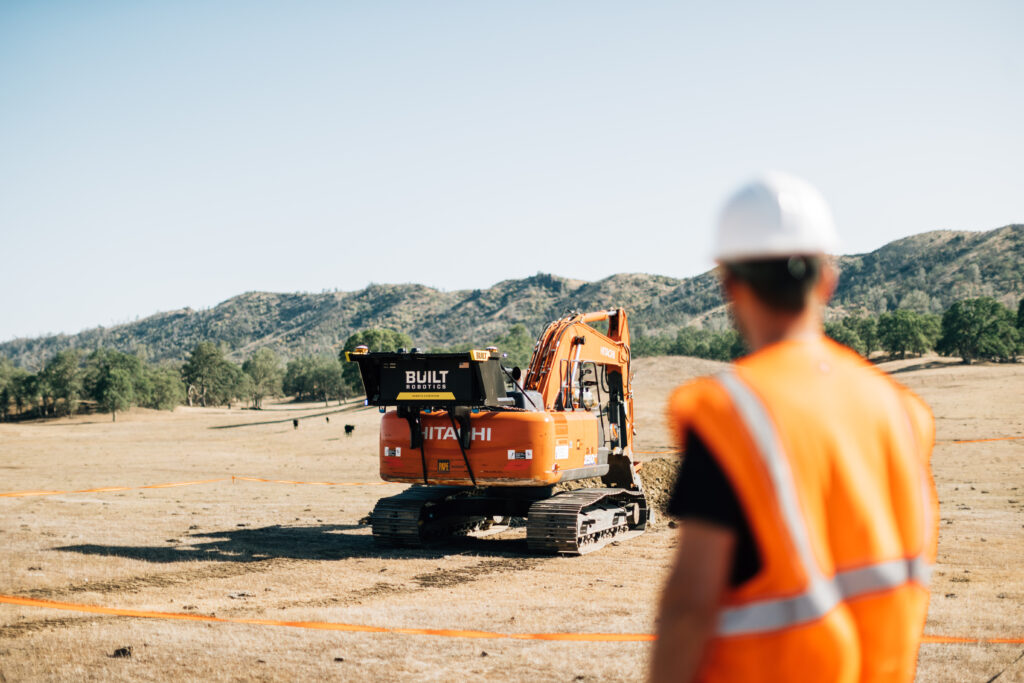
Although manual installation may come with lower initial costs and works well for smaller or irregularly shaped sites, it often leads to higher long‑term expenses due to labor requirements and slower progress. Robotic systems may involve a larger upfront investment, but they offer improved accuracy, safety, scalability, and overall cost‑effectiveness—particularly for large utility‑scale solar developments.
Autonomous Installation
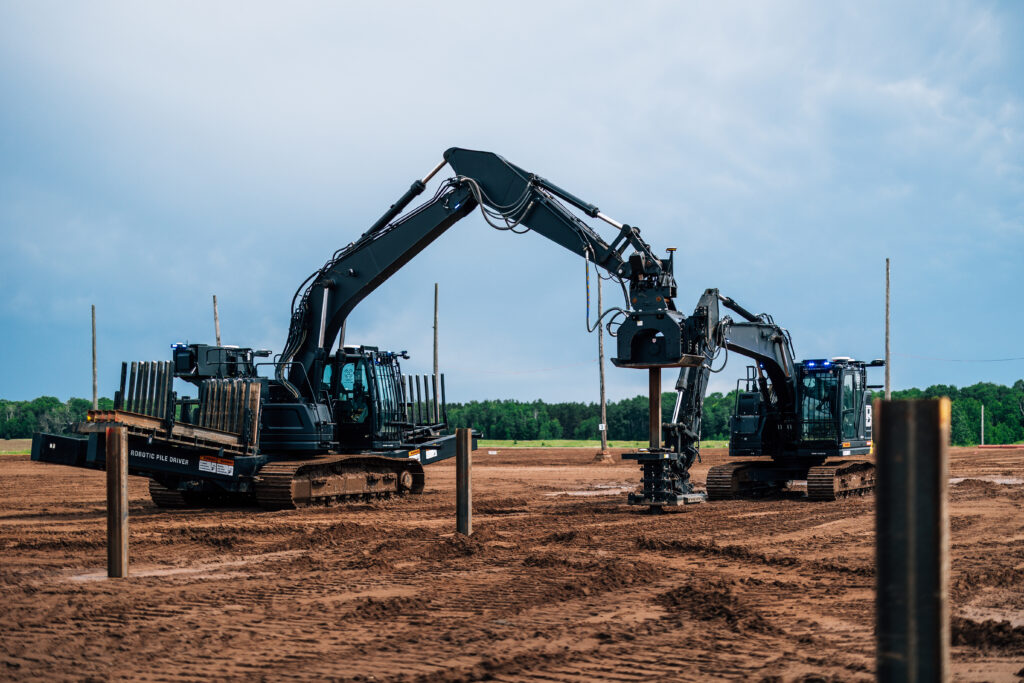
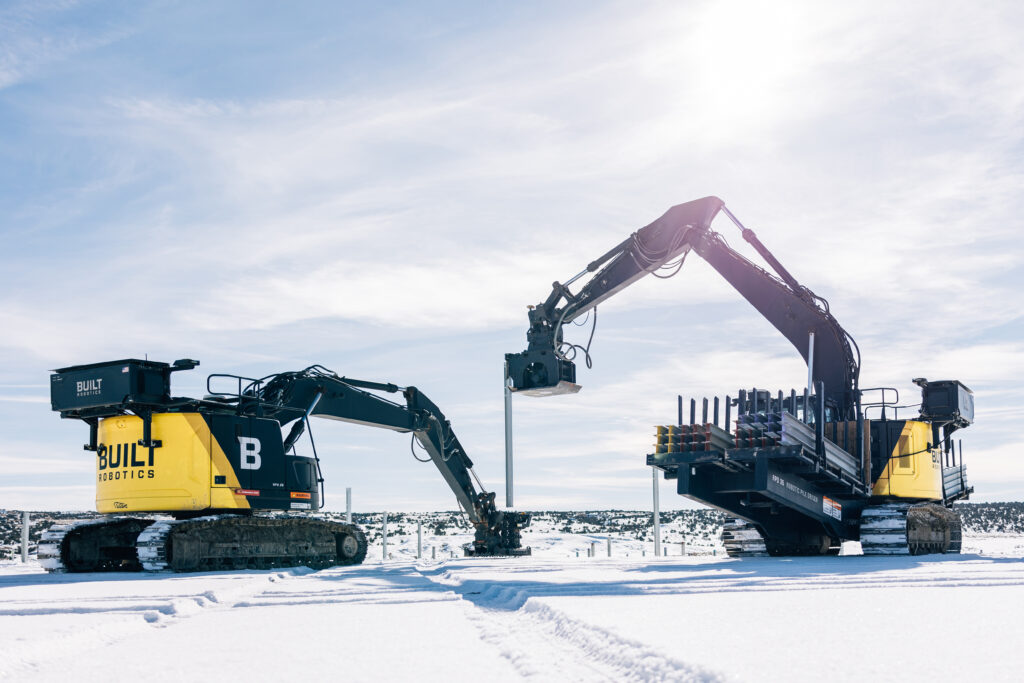
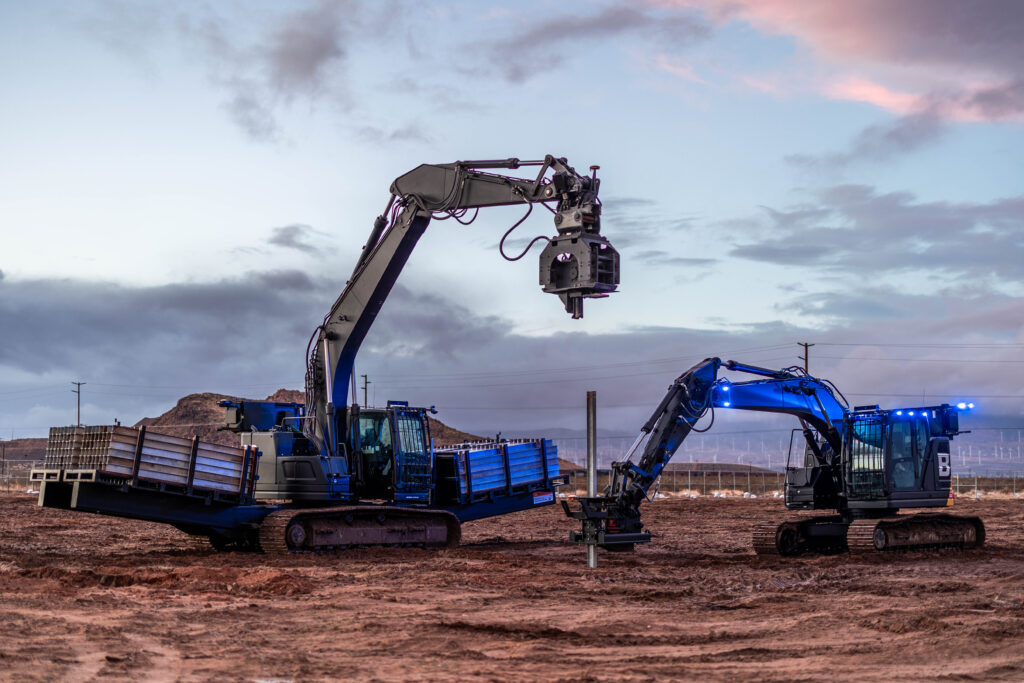
Built Robotics’ automated piling platform delivers significant performance advantages over traditional manual methods. The system relies on two coordinated robotic excavators that work together throughout the installation process. The RPD 35—Built’s robotic pile‑driving unit—automatically selects the appropriate pile from the inventory it carries on dual sleds, then drives it into the ground using a high‑frequency vibratory hammer. Working alongside it is the RPS 25, a robotic stabilizer that uses SICK sensors and advanced sensor‑fusion technology to hold and steady each pile during driving, ensuring the precise tolerances required by today’s most demanding tracker systems.
Even with these gains in productivity, autonomous pile installation still faces several technical challenges. Perfectly straight rows require exact alignment data, which cannot be achieved without dependable sensors. The system must also measure the spacing from the previous pile and the exact insertion depth with high accuracy—any deviation can compromise structural integrity or delay downstream construction.
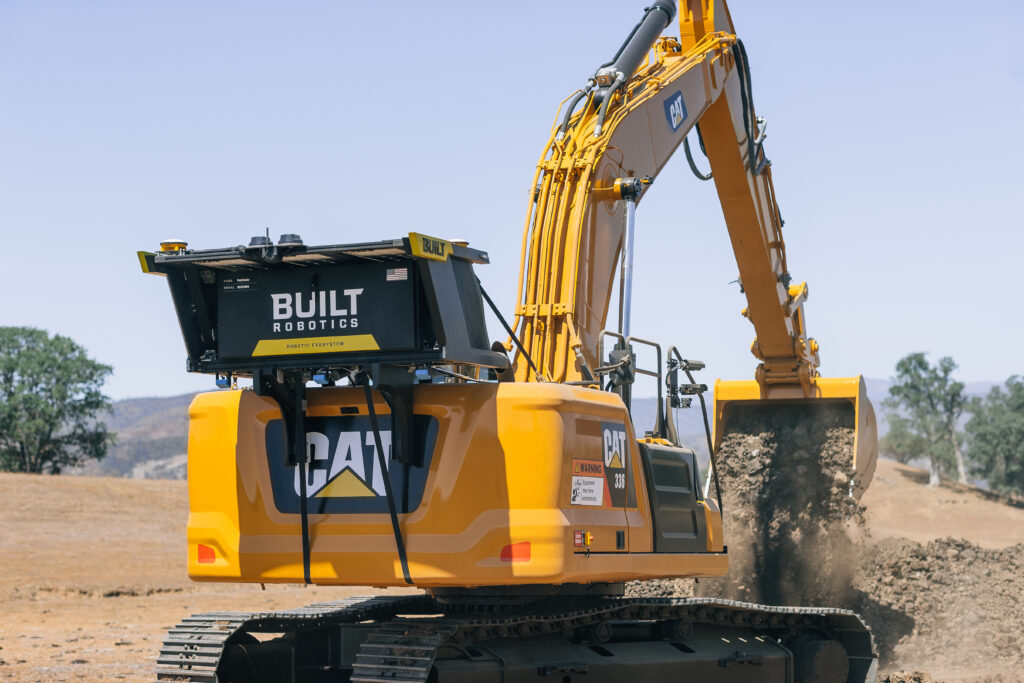
The toughest barrier, however, is finding sensors capable of surviving extreme jobsite conditions. Pile‑driving machines endure intense vibration, repeated shock loads, temperature swings, and bright ambient light—all of which can interfere with sensing performance. This makes rugged, highly stable sensors essential for maintaining precision in harsh environments.
Precision Distance Measurement with SICK
To meet these requirements, Built Robotics sought a durable distance‑measurement solution that could deliver consistent accuracy despite harsh mechanical stress. After extensive evaluation and field testing of several SICK technologies, the teams worked closely together to fine‑tune shock‑resistance performance for real‑world robotic construction environments.
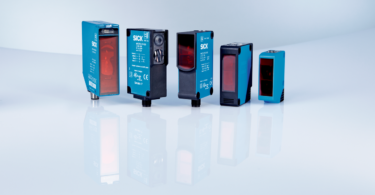
Each RPD 35 uses two SICK Dx50-2 distance sensors. One unit measures spacing to the previously driven pile to maintain exact alignment across the row; the second monitors the driving head’s position to track pile insertion depth in real time. Together, these sensors provide highly repeatable measurements that ensure piles are placed to engineering specifications.
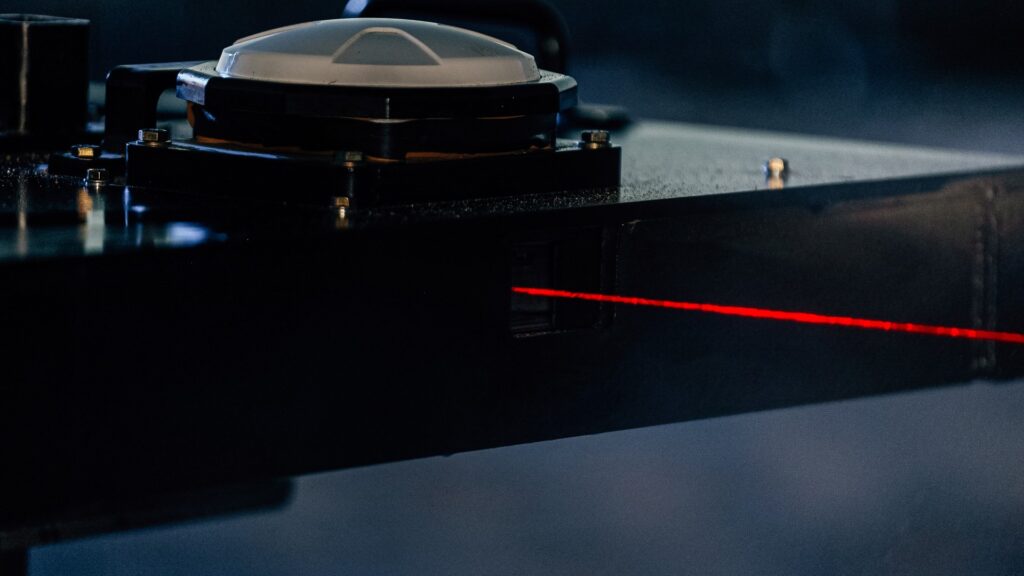
The RPS 25 stabilizer incorporates SICK’s MPB10 sensors to monitor vibration levels during calibration and operation. These rugged sensors maintain reliability even under prolonged exposure to extreme vibration and temperature swings, helping minimize equipment downtime and maintain continuous operation.
“Pile driving on utility-scale solar farms demands exactness and performance in the harshest of environments. Our customers rely on our autonomous solutions to deliver the tolerances they need on every pile driven,” Erol Ahmed, Vice President of Communications. “By integrating SICK’s high-performance sensors into our hardware stack, we’ve been able to turn massive pieces of heavy equipment into precision tools. This collaboration ensures that our customers can scale renewable energy infrastructure faster and more safely than ever before.”
Benefits of Automated Solar Pile Installation
Automating pile installation delivers measurable advantages for solar developers and EPCs. Robotic systems significantly reduce manual labor requirements and shorten installation timelines while improving accuracy, consistency, and overall throughput. Automation also minimizes worker exposure to demanding environmental conditions such as extreme heat, cold, or high‑vibration environments.
For the renewable energy sector—where utility‑scale solar farms require fast, repeatable, and precise installation—automation offers a scalable solution that performs reliably in challenging terrain and weather conditions. These autonomous systems can be deployed across projects of all sizes, enabling faster, safer, and more cost‑effective solar farm construction.