How LiDAR Automation Protects Critical Infrastructure
Tunnels are among the most complex and valuable pieces of transportation infrastructure. Their safety depends not only on structural engineering but also on the advanced technologies that monitor traffic before vehicles even enter the tunnel. When that technology works correctly, it prevents accidents, protects assets, and keeps vehicles moving.
But even with strict rules in place, over‑width commercial vehicles sometimes slip through, and the results can be costly. Damaged tunnel walls, destroyed signage, and downtime for repairs all impact safety and traffic flow. To address this recurring challenge, the Austrian motorway operator ASFINAG partnered with SPIE Dürr Austria and EBE Solutions to develop an automated width‑monitoring system built around SICK LiDAR sensors.
Although the project originated in Europe, the problem – and the solution – apply directly to North American roadways where DOTs and agencies manage thousands of tunnels, bridges, and critical choke points every day.
Why Over‑Width Vehicles Are a Real Risk
Commercial vehicles have grown larger, heavier, and more specialized. Even with posted limits in place, nighttime driving, unfamiliar routes, or unpermitted oversized loads can result in vehicles entering spaces that simply cannot accommodate them.
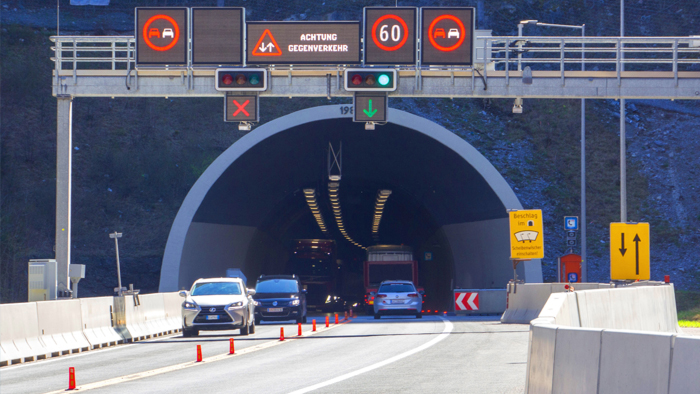
In one construction zone along the A10 Tauern Autobahn, ASFINAG had to temporarily route both directions of traffic through a single tunnel tube during renovation of the Ofenauer Tunnel. Although the tunnel’s posted width limit was 3.20 meters (just over 10.5 feet), multiple trucks exceeded that limit, especially overnight, and struck tunnel-mounted equipment.
“This width restriction was there for a reason. Tunnels are usually significantly wider at the bottom, however the round shape of the tubes means the total clearance width-wise at the top is substantially reduced. The higher the tunnel, the narrower it becomes and therefore tight for trucks with a tall load,” said Alfred Paukerl, Managing Director of EBE Solutions. “This is especially relevant when another wide vehicle approaches from the other direction. While trying to keep as far right as possible, the signs for emergency exits or the LED displays for speed restrictions would sometimes be damaged or even torn off completely.”
This situation is familiar to many transportation agencies across the U.S. and Canada, where even a single bridge or tunnel strike can cause hours of gridlock and millions in damage claims.
Designing an Automated Solution to Keep Traffic Moving
To prevent repeat incidents, ASFINAG approached EBE Solutions, a long-time engineering firm specializing in traffic safety and telematics. Their goal: automatically detect over‑width vehicles early and divert them before they reached the tunnel.
“A similar thing is done with vehicle weight measurements, which can also occur in free-flowing traffic these days. The idea was to develop a comparable solution for width measurement. As we had already installed a traffic jam warning system on the Tauern Autobahn ahead of the construction site area, it made sense for ASFINAG to inquire with us about such a width measurement system,” Paukerl said. “We couldn't offer them a ready-made solution, but we were happy to accept the challenge and got SICK on board as a sensor specialist.”
EBE-Road – a business division of EBE Solutions – and the experts from SICK developed several concept studies that were successfully presented to ASFINAG. EBE Solutions were subsequently commissioned to implement a suitable pilot project as part of the tunnel renovation works on the Tauern Autobahn (A10).
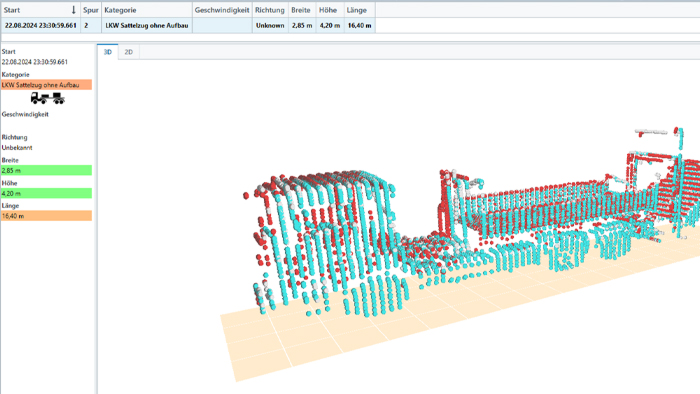
This solution could measure every vehicle’s width in real time, detecting over‑limit trucks before they reach the portal. This would then trigger automated traffic control responses, supporting tunnel operators with clear, actionable data.
This solution is like the free‑flow weigh‑in‑motion systems already widely used across North America—but now applied to width measurement.
How the Multi‑Sensor LiDAR Setup Works
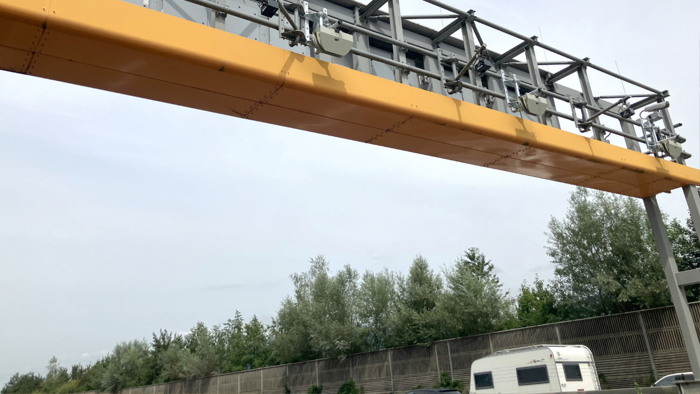
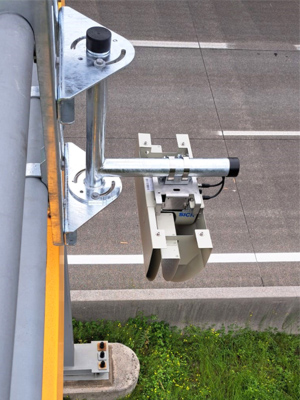
The system was installed on an existing overhead gantry roughly one kilometer ahead of the tunnel entrance. To accurately cover both lanes of traffic, the engineering team selected three SICK LMS511 2D LiDAR sensors, mounted overhead and angled to produce a complete cross‑section of each vehicle.
Each LMS511 provides a 180° scanning field, and by combining three units, the system generates a detailed, high‑resolution point cloud showing vehicle outline, maximum width, and position within the lane.
The onboard software then evaluates whether the vehicle exceeds the allowable width. If it does, the system sends an alert directly to the tunnel control center.
If an oversized vehicle is detected, the system immediately activates a coordinated response: traffic lights switch to red before the tunnel entrance, variable speed limit signs lower the approach speed, and LED message boards display clear symbols and bilingual messages explaining why traffic has stopped. The identified vehicle is then guided to a nearby pull‑off area, where operators can perform a manual width verification. This ensures safe, consistent enforcement—without slowing down compliant drivers.
Flexible Controls for Real‑World Operations
Because the system runs 24/7, EBE Solutions added an important control feature: an override mode for emergency and maintenance vehicles. For example, snowplows often exceed the preset width limit but must still pass through the tunnel during winter operations. Operators can temporarily disable alerts so essential services aren’t interrupted.
All system actions—from alerts to overrides—are logged for auditing and reporting. Notably, the system stores vehicle-point clouds only, not license plates or personal data, ensuring compliance with privacy requirements.
Reliability in Harsh Weather and Challenging Conditions
For outdoor roadway applications, environmental reliability is essential. The LMS511 LiDAR sensors are IP67 rated and equipped with integrated heaters for snow and ice. It is also resistant to rain, dust, fog, and spray and is unaffected by bright sunlight or glare. It is designed for low‑power, long‑duration operation.
One key feature for this installation was the ability to filter out road spray during heavy rain—common with large trucks at highway speeds. Working with SICK engineers, the team restricted the vertical measurement zone to focus only on the upper portion of each vehicle where tunnel damage occurs, ensuring precise detection without false alarms.
High Accuracy and Immediate Real‑World Results
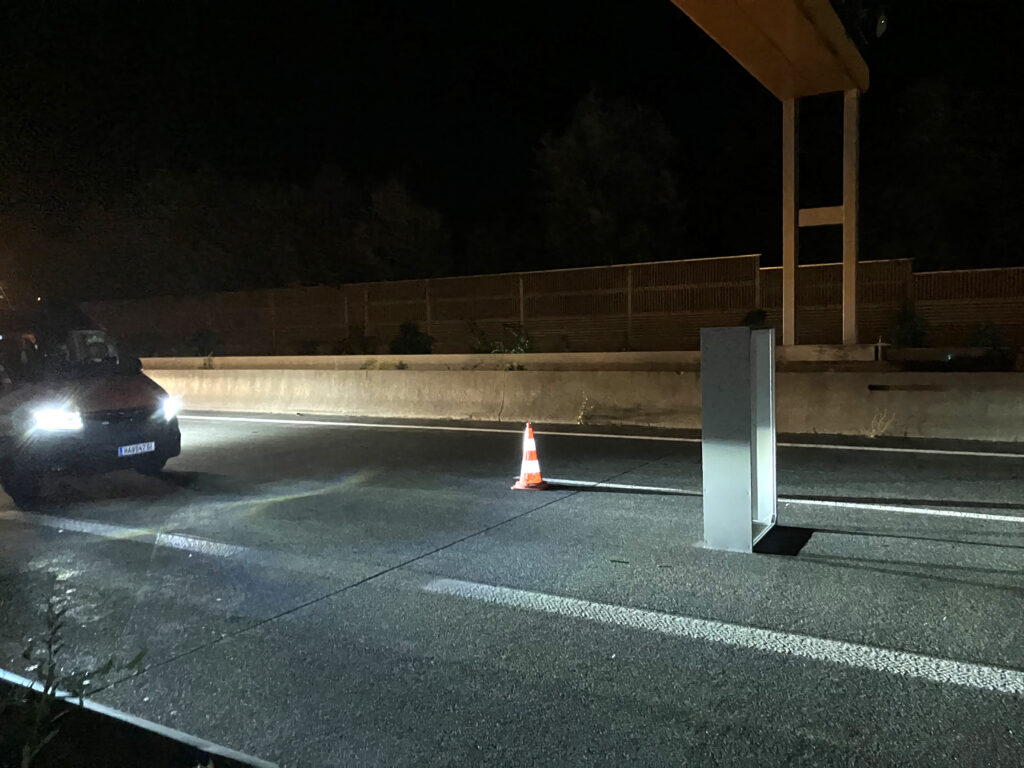
After a thorough calibration process—aligning each sensor’s X, Y, and Z axes using a reference object—the system went live in September 2024. Almost immediately, it flagged several trucks that were objectively too wide.
But within weeks, alerts dropped significantly. Word had clearly spread among carriers: the tunnel was now monitored by “laser eyes,” and compliance increased quickly.
For tunnel operators, the benefit was immediate, with fewer unnecessary stoppages, no false trigger delays, and the elimination of new damage to tunnel signage or equipment, all contributing to a noticeable increase in overall driver safety.
A Proven Approach for North American Infrastructure
Tunnel and bridge strikes remain a major challenge for transportation agencies across North America. By pairing automated width‑monitoring technology with rugged LiDAR sensors, agencies can proactively prevent infrastructure damage, reduce costly lane closures and emergency repairs, improve safety for both freight and passenger traffic, support DOT compliance and enforcement efforts, and keep traffic flowing smoothly, even during construction or maintenance activities.
SICK LiDAR technology delivers the precision, environmental durability, and reliability needed for these mission‑critical applications.
If you're exploring solutions for oversize vehicle detection, tunnel protection, or roadway automation, SICK’s engineering team can help design a system tailored to your unique corridor or infrastructure needs.